




Did You Know...
Around 80% of women are wearing the wrong bra size.*
Most of us judge a sports bra by one simple question: Does it feel comfortable?
But comfort alone is a bit like judging running shoes by how they feel while you’re standing still. Useful, yes, but the real story starts when you begin moving.
A sports bra can feel “fine” when you do the jump test at try on, but fail you the moment you really start moving.
And have you ever bought one that felt great in the changing room, only to spend your entire workout:
Tugging it down between sets?
Adjusting straps mid-run?
Or quietly planning to never wear it again?
Or maybe the opposite. A bra so tight it feels like it’s doing its job… yet you’re still bouncing with every step.
These aren't just annoying workout distractions. They're clues.
Clues that the issue may not be your size at all, but how your sports bra fits, supports, and responds to movement. Because a sports bra can feel comfortable and still be the wrong sports bra for the workout you're doing.
That's where a lot of the confusion comes from. Many women assume sports bra shopping starts and ends with size, when in reality, support level, bra construction, activity type, and personal preference all play a role in how a bra performs once you start moving.
Sometimes your sports bra can impact whether you even make it to the gym, full stop. Research has shown that excessive breast movement can negatively impact exercise comfort, confidence, and participation, with some women avoiding certain activities entirely due to discomfort.
And while the conversation often centres around larger busts, it’s important to know that breast tissue has limited natural support, meaning movement happens across all cup sizes.
That's why finding the right sports bra isn't simply about choosing a size. It's about finding the right combination of fit, support, and construction for the way you train.
Find The Best Sports Bra For You
The good news? Finding a better-fitting sports bra is often much simpler than people think.
Most sports bra fit issues aren't caused by one big problem. They're usually the result of small mismatches between fit, support level, activity, and personal preference.
That's why we created this guide with help from Gymshark Product Developer, Nicki Hall.
Nicki has spent decades fitting, testing, developing, and refining sports bras for women across different body types, cup sizes, and training styles. From high-support running sports bras to low-impact studio styles, she understands exactly why some bras work for certain people and why others end up forgotten at the back of the drawer.
Together, we'll help you understand:
The biomechanics of breast movement during sport
How to find your sports bra size
How a sports bra should actually fit
Why support levels matter
Which sports bra styles suit different activities
How to choose the right sports bra for your body and training style
Why Your Breasts Need Support
The Biomechanics of Breast Movement During Sport
When support is inadequate, the body doesn’t just feel it in the chest; it feels it in your entire body and has to compensate in other areas.
Research into breast biomechanics has found that insufficient support can also influence the way your entire body moves during exercise, from your posture and trunk stability right down to your hips and knees.
When breast movement isn't properly controlled, women often make subconscious adjustments to compensate, including shortening their stride, reducing arm swing, altering their posture, or limiting the intensity of their movement. Over time, these changes can make exercise feel less comfortable and less efficient [1].
Breast movement itself is also more complex than many people expect.
They don’t just move up and down. Studies show a three-dimensional figure-of-eight motion during running, meaning breasts move forwards, sideways, and vertically at the same time. [2].
This is why simple “compression” alone isn’t always enough.
Running, jumping, sprint intervals, and HIIT create repeated, multi-directional impact that your body constantly tries to stabilize.
Think of the last time you wore a sports bra that didn’t feel quite right:
Maybe you found yourself instinctively holding your chest while running.
Maybe you skipped burpees, box jumps, or skipping because they feel uncomfortable.
Maybe you adjusted your posture during a workout, cut a run short, or chose a different class altogether because you didn't feel supported enough.
You’re not alone.
Research has consistently found that breast discomfort and excessive movement can influence participation in physical activity, with some women actively avoiding certain forms of exercise altogether [3].
It’s also important to know that breast movement occurs across all cup sizes. While women with fuller busts often experience greater displacement and higher support needs, studies show that breast movement is present regardless of breast size [4].
In other words, support isn't only a concern for larger cup sizes. Whether you're an A cup or a G cup, your breast tissue still moves during exercise and can benefit from appropriate support.
That's why finding the right sports bra isn't just about reducing bounce. It's about helping you move with confidence, maintain natural movement patterns, and stay focused on your training instead of constantly thinking about your bra.
When your sports bra fits properly, it's one less thing competing for your attention, allowing you to lock in to your workout and nothing else.
How To Find Your Sports Bra Size
Before looking at support levels, styles, or collections of sports bras, start with the foundation - your measurements.
If you have ever found yourself thinking, “I’m always a medium, but this feels tiny” or “my usual size suddenly feels unsupportive”, it might be because you’re comparing how your sports bra feels to the bra that you wear every day.
Sports bras typically cover multiple band and cup combinations within a single size, and because of this, it's easy to default to the size you think you are.
Taking a few minutes to measure yourself gives you a much better starting point and removes a lot of the guesswork.
To measure your sports bra size accurately, you need two measurements:
Your band measurement
Your bust measurement
Step 1: Measure Your Band Size
Take a soft measuring tape and wrap it around the top of your ribcage, sitting directly underneath your breastbone.
The tape should:
Sit level all the way around
Stay parallel to the floor
Feel snug without digging in
Your band measurement is incredibly important because most of your sports bra support comes from the band rather than the straps.
"Around 80% of the support should come from the underband. If the band isn't fitting correctly, the rest of the bra is already working way harder than it should." says Nicki when asked what the most important thing was when it came to finding a sports bra that fits correctly.
If you've ever found yourself constantly pulling your sports bra back down during a workout, this is often where the problem starts.
Breast tissue has no muscle. That means during movement, it is supported externally by skin and ligaments, which can only do so much under repetitive impact.
Tip: If your sports bras regularly ride up, shift during workouts, or lose support quickly, it is worth double-checking this measurement.
Step 2: Measure Your Bust Size
Next, wrap the measuring tape around the fullest part of your bust. Try to stand naturally and avoid pulling the tape too tightly against your body.
The tape should:
Sit flat and comfortably on the skin
Stay level all the way around
Measure the fullest part of your chest
This measurement helps determine how much space and coverage you'll need within the bra itself.
Step 3. Check Your Measurements Against Our Sports Bra Size Chart
Your measurements will provide a starting point, but remember that sports bra fit can also vary depending on support level, construction, and intended activity.

What If You’re Between Sizes?
The right choice often depends on how you train and how you like the support level to feel. If you've landed between two sizes, you're not alone: Sports bras often cover multiple band and cup combinations, which means many women naturally sit somewhere in the middle.
The right choice often comes down to how you train and how you like your support to feel.
Consider sizing down if:
You prefer a more compressive feel to help keep your boobs locked in with no chance of them falling out or bouncing.
You do higher impact training and want more hold
You are choosing high-support styles
Consider sizing up if:
Comfort is the priority
You sit between support levels
You prefer less compression
You are choosing lower support styles
The important thing to remember is that being between sizes doesn't automatically mean one size is wrong.
Sometimes it simply comes down to preference. A runner may prefer the smaller size for extra support, while someone buying a bra for Pilates may prefer the larger size for that extra level of comfort.
Are your boobs spilling out at the top or sides? Is the bra baggy across your chest? Does the underband feel uncomfortably tight, or is it riding up your back? All these signs can indicate that you might be wearing a size that’s too small or too big for you, meaning you haven't got the best cup for your coin.
3 Ways To Tell If Your Sports Bra Fits
1. The Band
The band is the foundation of your sports bra fit. When it fits properly, everything else works as intended. When it doesn't, support can quickly unravel, no matter how good the cups or straps are.
According to Gymshark Product Developer Nicki Hall, one of the first things she looks at when assessing sports bra fit is the underband.
"Your underband should sit firmly around your ribs, not your breast tissue," she explains.
If the band isn't working properly, the straps and cups are forced to compensate, which can affect both comfort and performance. This might include chafing or rubbing. A well-fitting band should feel secure without making you feel squeezed.
Breath test: You should be able to take a deep breath comfortably, but the bra should stay anchored against your ribcage during movement.
Signs your band is too loose
You might notice:
The bra rides up at the back rather than sitting flat on your back.
It moves during workouts, which can cause chafing due to the constant movement.
Support decreases as you move, as there’s more room for your chest to move within the sports bra.
You regularly pull your sports bra down
“One of the easiest tests?” Nicki tells us.
“Raise your arms above your head. If the bra moves significantly or lifts away from your body, the band may be too large.”
Signs your band is too tight
On the other hand, an overly tight band can create a completely different set of problems.
You might experience:
Pressure around your ribs
Digging underneath the bust
Difficulty breathing comfortably
Red marks that linger long after training
A supportive sports bra should feel secure.
It shouldn't feel like a corset, save those for your nights out!
2. The Cups
The cups are responsible for containing and supporting your breast tissue, and this is where many women get the feel-test wrong.
Many think that a tighter fit automatically means more support. Well, not necessarily.
"Your breasts should sit comfortably within the bra. If you're wearing a padded style, scoop everything into place and move around a little”, says Nicki. “That's usually when fit issues reveal themselves."
Your cups should contain everything comfortably without excess movement, gaping, spilling, or flattening more than you want. More than anything, the cups are meant to fit you as you are; you shouldn’t be squeezing into them.
Signs your cups are too small
Spillage over the neckline
Side overflow near the underarm
Feeling compressed in an uncomfortable way
Breasts pushing out during movement
Signs your cups are too large
Gaping fabric
Empty space within the cups
Wrinkling material
Less support than expected
If you've ever thought, "It feels tight, but they’re still bouncing." This means it’s probably time to look at the support level or bra construction, rather than just the cup size alone.
3. The Straps
The straps play an important supporting role, but they should never be doing overtime.
If your shoulders feel sore after training, your straps leave deep grooves, or you find yourself immediately loosening them the second you get home, this can be a sign that the band isn't providing enough support and is causing the straps to overcompensate.
A good pair of straps should feel almost forgettable.
You should notice the support they provide, but not the straps themselves.
As Nicki explains:
"The straps should provide around 20% of the support. They help stabilize the fit, but they shouldn't be doing all the heavy lifting. As a rough guide, you should comfortably be able to slide a finger underneath each strap.”
Signs your straps are too tight
Shoulder discomfort
Deep marks after training
Neck tension
The bra is being pulled upwards
Signs your straps aren't supportive enough
Slipping off your shoulders
Constant readjustment
Increased movement during cardio
Uneven fit
For fuller busts in particular, adjustable straps can make a huge difference because they allow you to fine-tune the fit as needed.

Quick Fit Check Before You Move On
Your sports bra size is likely working if:
✅ Band stays level
✅ No spillage at neckline or sides
✅ Straps stay comfortable
✅ Movement feels controlled
✅ You are not adjusting throughout the workout
If not, do not jump straight to changing sizes. Sometimes the issue is support level or style rather than sizing itself.
Sports Bra Styles And How They Affect Fit
If you’ve ever walked into an activewear store, you’ll know that sports bras come in all shapes and styles. And not all sports bras create support in the same way.
Two bras can be the same size, both say high support, and still feel completely different when you put them on. That’s because how the bra has been built determines how your breasts are held.
Some minimise movement by holding the bust firmly against the chest, others create support through structure, shaping, and separation. Some combine both approaches.
Understanding the difference can help explain why one bra becomes your holy grail, while another ends up living permanently at the bottom of your gym drawer.
Compression Sports Bras
Compression sports bras support by pressing the bust closer to the chest wall to reduce movement.
Instead of separating and lifting, they work by creating a more secure, held-in feeling. Our Compression Sports Bra is the perfect example of a bra that provides support in this way.
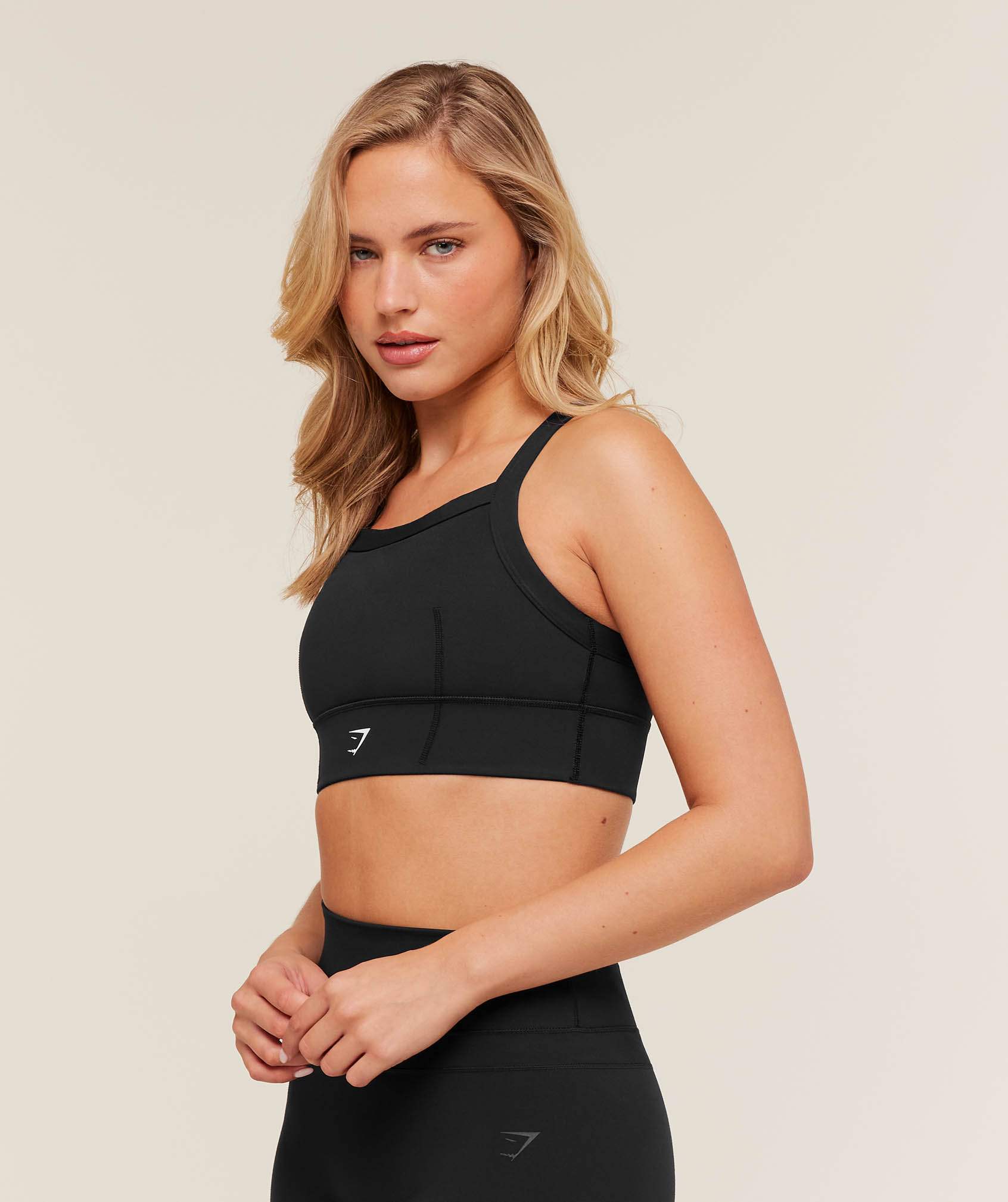
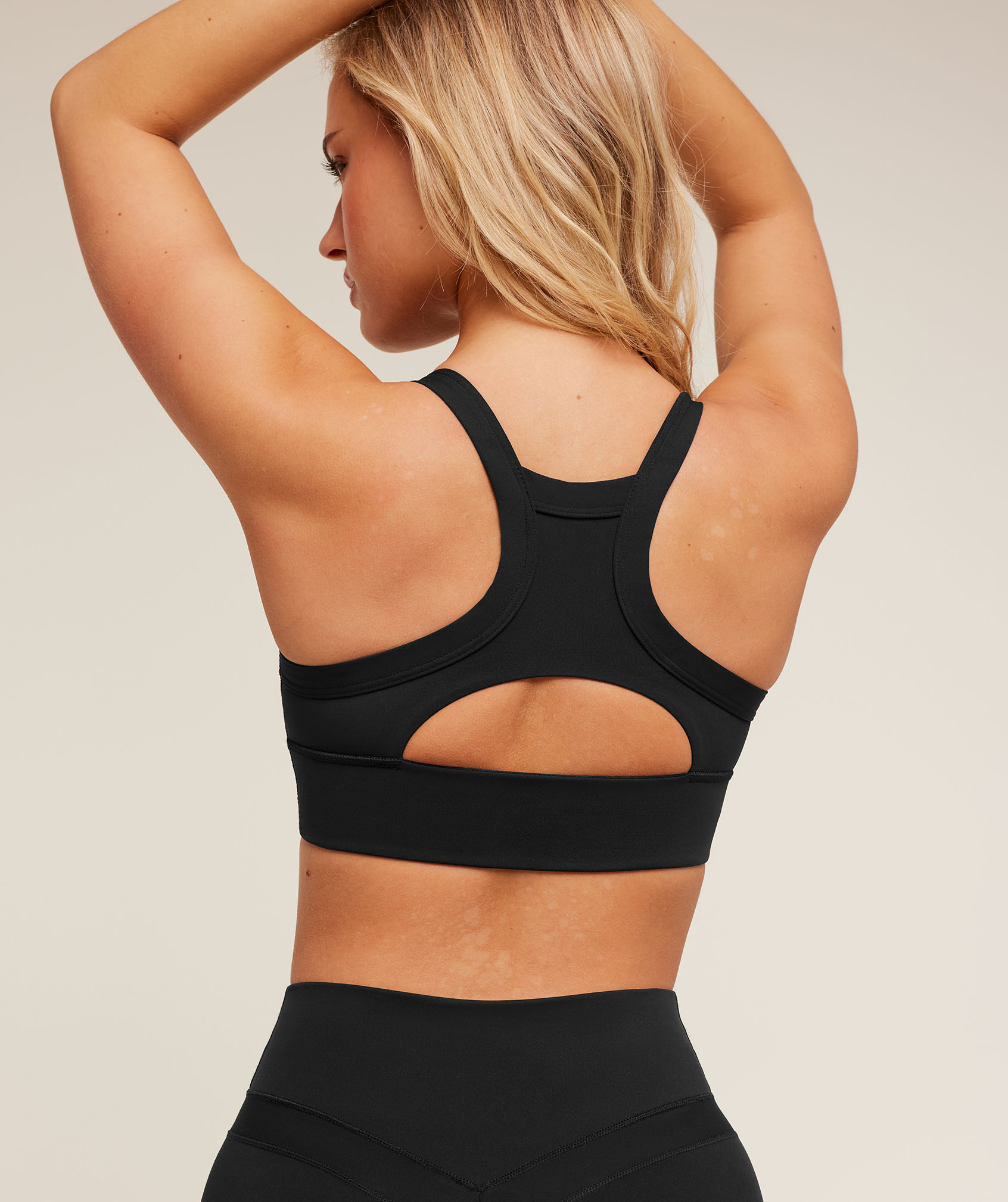
You will usually notice:
A closer fit to the body
More compression through the chest
Reduced breast bounce
Less movement during cardio
Compression Sports Bras are best for:
Running
HIIT
High-impact cardio
Some people love this “held-down” feeling, but they’re not for everyone. Some people, particularly those with fuller busts, find that very compressive styles can feel flattening or create the feeling often called “uniboob”, where support comes from pressing everything together rather than shaping each individual breast.
If this sounds like you, then you probably want more structure from your sports bra.
Encapsulation Sports Bras
Encapsulation sports bras use structure and separation rather than relying only on compression. They create more support by surrounding each individual breast with shaping, panels, cups, or structure to help minimise movement.
A more structured and shaped style usually feels more natural and less restrictive than a one-compressive foam cup. Prefer the sound of this style? Our High-Support V-Neck Sports Bra provides separation and high support without looking frumpy.
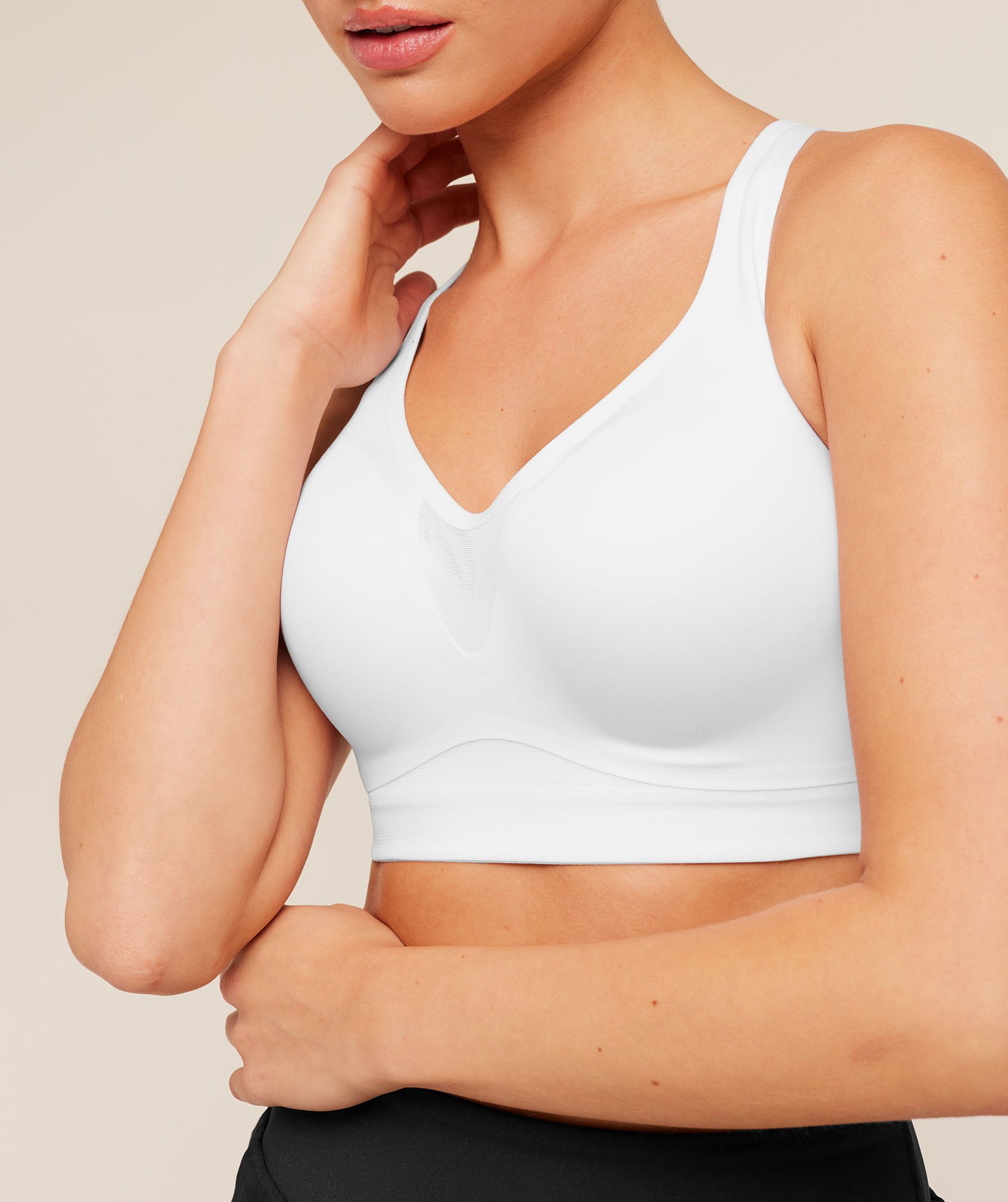
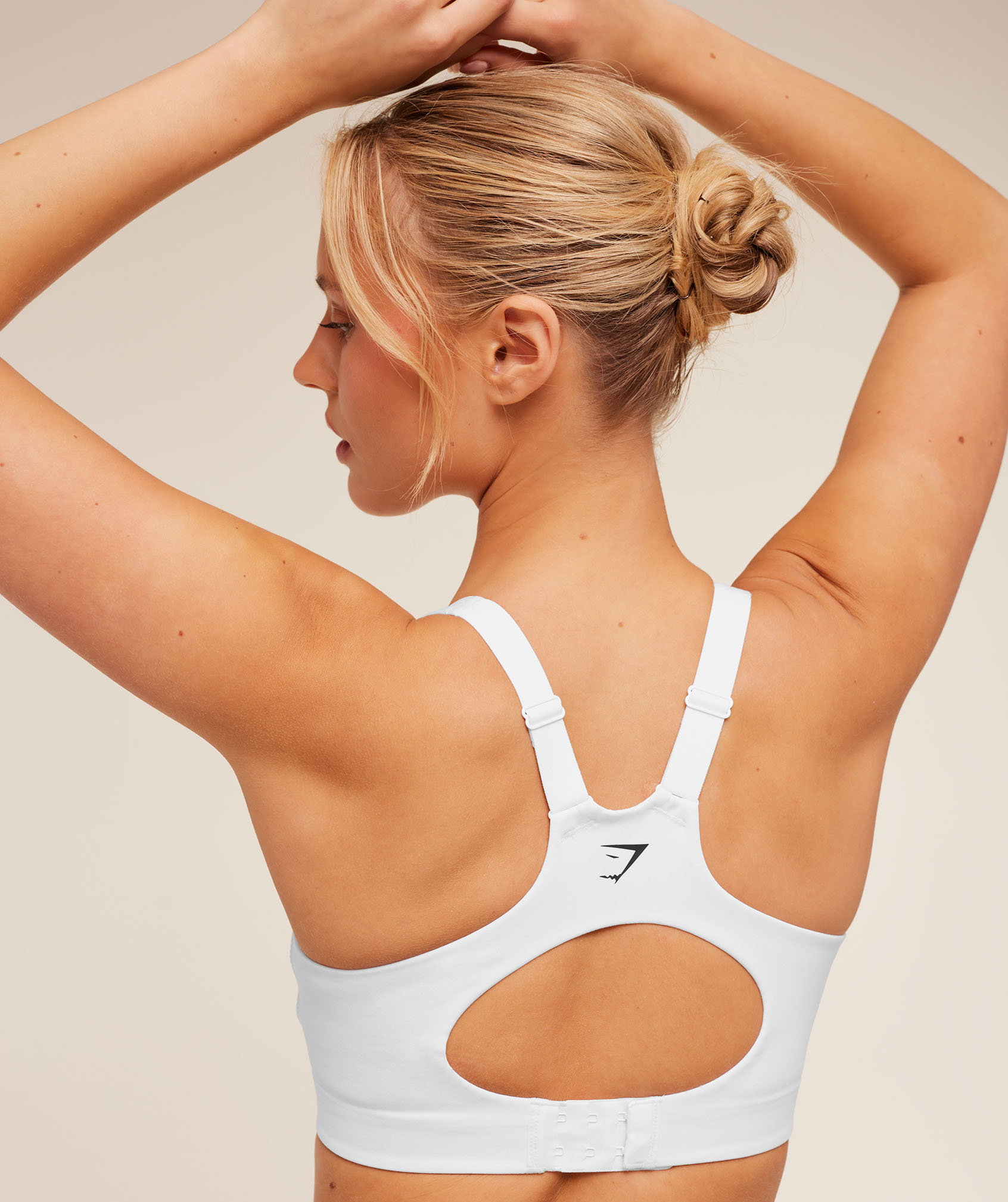
People usually move towards encapsulation when they want:
More breast shaping
Fuller bust support
Less of a “flattening” effect
Comfort for longer-wear periods
Hybrid Sports Bras
Hybrid bras combine compression and structure and are likely the style of sports bra you come across most often. An example of a combination sports bra is our popular Hybrid Sports Bra, which supports each breast individually while providing compression for support.
You get:
Compression to reduce bounce
Structure for shape
Support without feeling overly restrictive
These are often the easiest entry points because they work across lots of training styles.
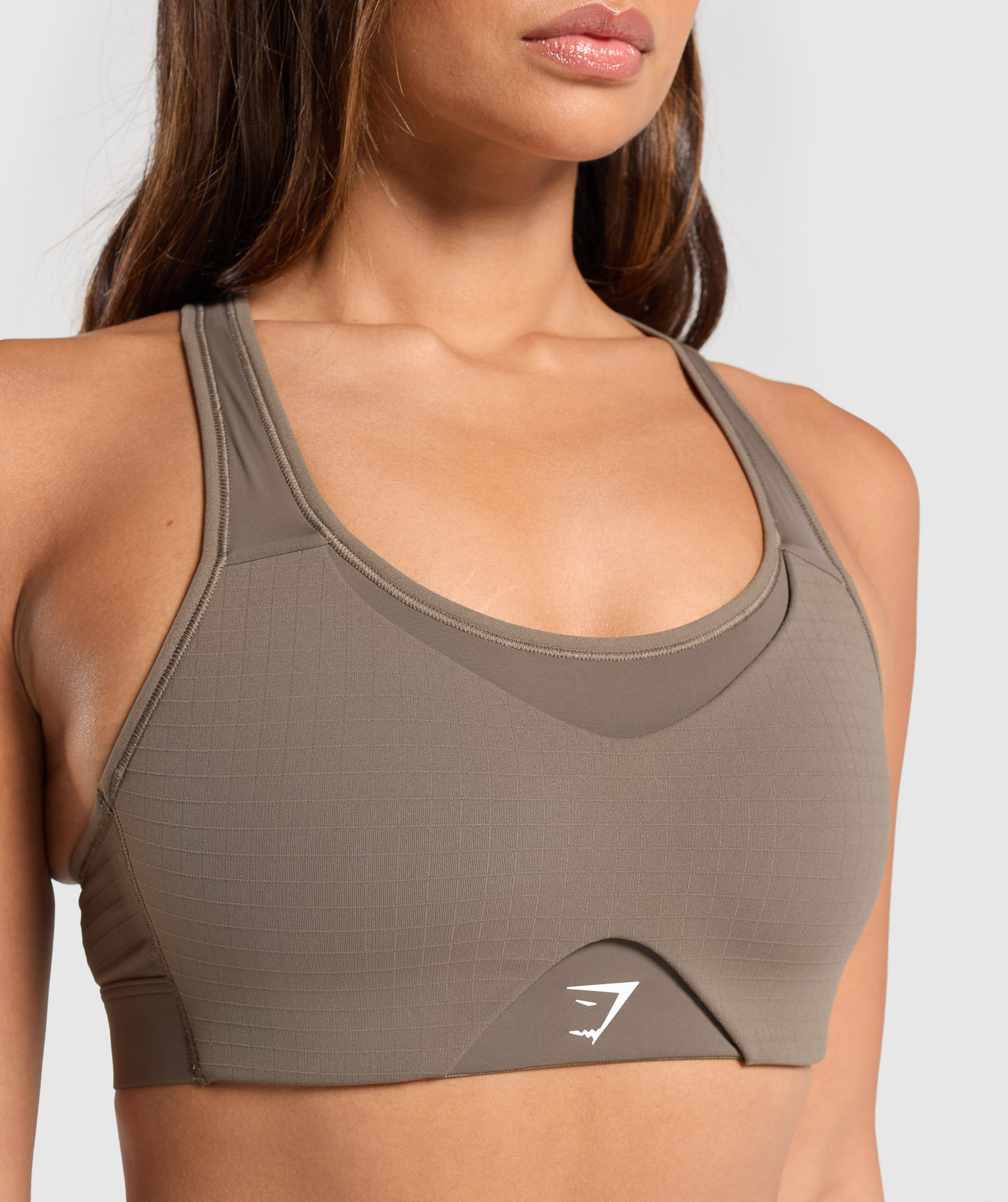
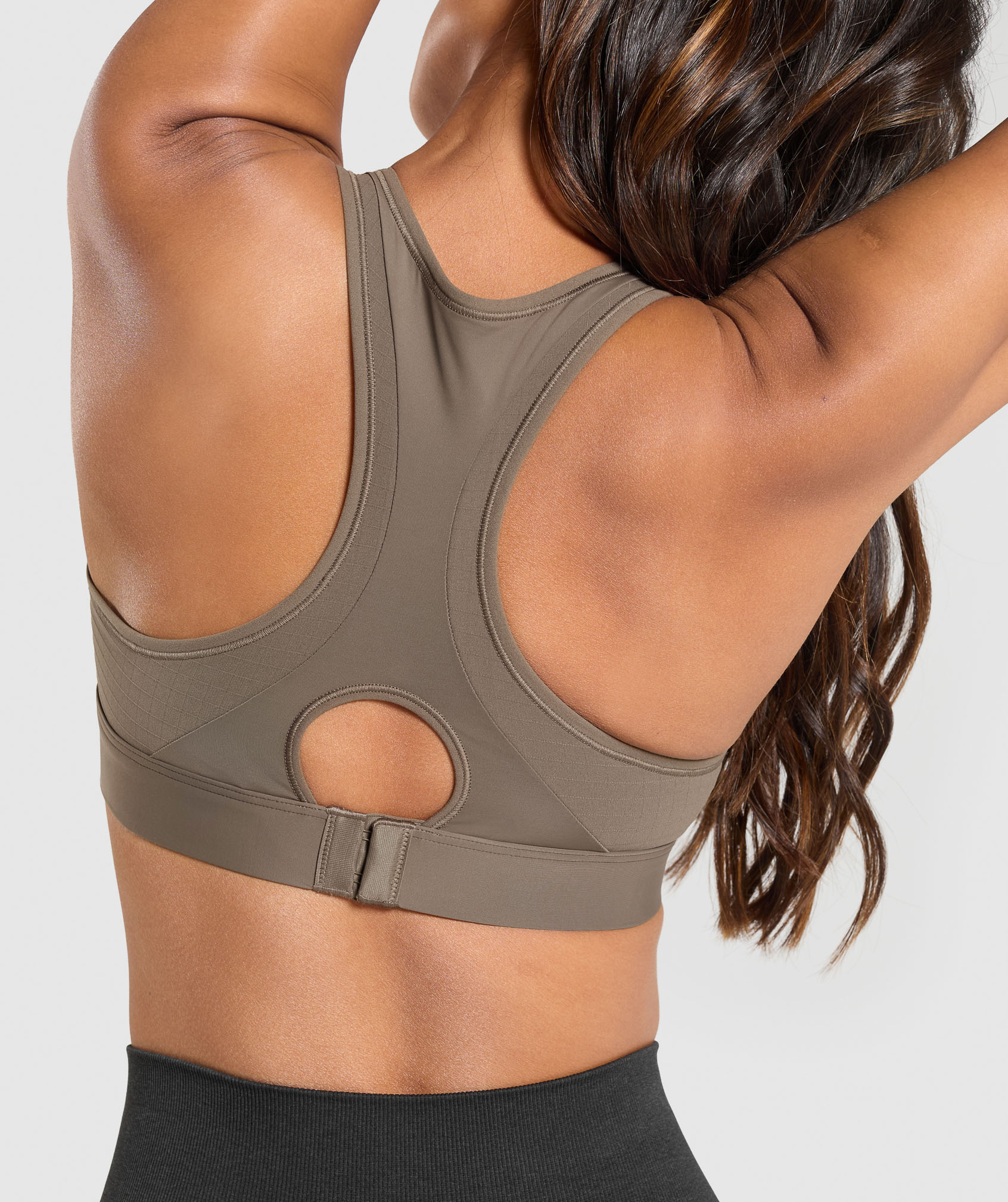
Hybrid sports bras are ideal for:
Mixed training
Strength training
Everyday gym use
If your training changes regularly, hybrid styles tend to give the most flexibility.
Sometimes finding your perfect fit can be a little bit of trial and error, so you can always head to our simple returns portal and exchange your sports bra for another size if it’s not quite right.
Sports Bra Support Levels Explained
Low Support Sports Bras
Low-support sports bras are designed for lower-impact activities where comfort, flexibility, and freedom of movement take priority over controlling bounce.
They're often the styles people describe as feeling like a second skin, thanks to softer fabrics, lighter construction, and less compression through the chest.
You'll typically find:
Softer fabrics
Minimal compression
Lighter straps and bands
More open-back and strappy designs
Lower coverage silhouettes
Low support is often best for:
Yoga
Pilates
Walking
Stretching and mobility work
Everyday wear
Many of Gymshark's Minimal and lighter studio styles fall into this category.
The biggest mistake people make with low-support bras is assuming that because they feel comfortable, they're suitable for every workout. If your session includes running, jumping, burpees, or high-impact circuits, you'll likely need more support, regardless of your cup size.
Medium Support Sports Bras
Think of medium support as the perfect middle ground. These bras provide more stability than low-support styles without creating the locked-in feeling that some people associate with high-support sports bras. For many women, they're the most versatile option in the drawer.
You'll typically find:
Moderate compression
Wider underbands
More structured construction
Greater coverage
Improved stability during movement
Medium support is often ideal for:
Strength training
General gym workouts
Cycling
Hybrid training
Circuit training with limited impact
If your workouts vary throughout the week, medium support is often the safest place to start. It provides enough support for most gym sessions while still feeling comfortable enough to wear for longer periods. It’s a great everyday option, especially for those with medium-sized breasts, but it’s important to remember that higher-impact movement still requires more support.
High Support Sports Bras
High-support sports bras are designed to minimise movement during higher-impact exercise.
Research has shown that breasts move in multiple directions during exercise, not just up and down. That's why high-support bras typically combine several support features rather than relying on compression alone.
You'll often find:
Stronger compression
More structured cups
Wider straps
Higher necklines and coverage
Adjustable straps and bands
Reinforced underband support
High support is best for:
Running
HIIT
Hyrox
Team sports
Sprint training
A good high-support sports bra should feel secure, not restrictive.
If you're struggling to breathe comfortably, the band is painfully tight, or you're counting down the minutes until you can take it off (iykyk), the issue may be fit rather than support level.
The best high-support sports bras allow you to focus entirely on your workout, not on what your chest is doing every time your feet hit the floor.
Match Your Sports Bra To Your Activity
One of the biggest reasons people struggle with sports bras is that they shop by look first and movement second.
We've all done it. You fall in love with a strappy back design, you buy it immediately, then you wear it on a run and spend 30 minutes wishing you'd made a different decision.
Think about your workouts first ➡️ then choose the support ➡️ then choose the style.
For Running
Running is one of the highest-impact activities for the chest because movement happens repeatedly with every step.
That means your sports bra is not just dealing with one jump or one rep. It becomes about managing continuous movement for the whole session.
For running, look for:
High support
Strong underband structure
Adjustable straps
Higher coverage
Compression or hybrid construction
If you have a fuller bust, features like adjustable straps and more coverage often become even more important because support needs increase as movement increases. But even if you're a long-serving member of the itty-bitty committee, don't be fooled into thinking you can skip on support.
Many women tell us they only realise their sports bra isn't supportive enough once they start running. Standing still, everything feels fine, then the bouncing starts as you pick up the pace.
A supportive running bra should help you forget about your chest completely so you can focus on the run itself.
Tip: If your treadmill faces a mirror, you can visually test the support of your sports bra while running by monitoring the bounce. If there’s a lot of movement, it’s a sign you need more support.
For Strength Training
Strength sessions tend to involve less repetitive impact but more varied movement. You’re bending, squatting, pressing, pulling, and potentially ending up upside down during back extensions or a questionable core circuit.
Many people find Medium support works brilliantly here because it gives:
Stability
Breathability
Freedom to move
Less restriction during lifts
Without the need for maximum compression.
If your session includes conditioning elements like burpees or box jumps, you may want to move towards medium-high or high support.
Think about the workout as a whole, not just the first exercise, and dress for the highest-impact movement.
For Pilates & Yoga
Yoga and Pilates have changed what people want from sports bras. People increasingly want sports bras that feel good both inside and outside the studio.
There is more focus now on:
Softer support
Minimal silhouettes
Lower coverage styles
Studio-to-everyday wear
Comfort during longer sessions
Low support often works beautifully here because the movement demands are different. Think slower, stretchier, more mobility.
Many of the styles people gravitate towards for Pilates are also the styles they wear with oversized joggers, wide-leg sweatpants, zip hoodies, and relaxed layers afterwards.
This is where styles like Minimal, strappy bras, and lighter constructions tend to shine. They blur the line between activewear and everyday wear.
But remember: If your “Pilates class” suddenly includes jump circuits and mountain climbers, your support needs may change, too. Try to keep the cups in if you can, just in case.
For Hybrid Training & Hyrox
Hybrid sessions ask just as much from a sports bra as it does your stamina and endurance.
You might be going from:
Run → sled push → lunges → ski erg → run again
Your bra needs to keep up with multiple movement patterns without needing constant adjustment.
Usually this means:
Medium to high support
Hybrid construction
Strong band support
Secure straps
More coverage
A useful question to ask yourself is: Would I still feel comfortable wearing this thirty minutes into the workout?
Because support that feels fine during the warm-up can feel very different once fatigue kicks in. Leave the regrets in the drawer and make sure you select ample support.
What’s The Right Fit For Your Body Type?
Every body is different, but certain features may help depending on your breast size. Choosing a sports bra for your shape will pay off in the long run, and save another purchase when you realise the support isn’t cutting it.
For Bigger Busts
You may prefer:
More structure
Adjustable straps
Higher support
Wider underbands
Higher coverage styles
A common mistake is sizing down for more support.
Often, better construction works more effectively than more compression.
If you love the look of lighter styles but need more hold, try moving towards a slightly higher neckline or making sure your bra has adjustable straps.
For Smaller Busts
You often have more flexibility across support levels and silhouettes, which gives you a lot of buying freedom!
Styles like minimal, ruched bras, strappy backs, and lower coverage options can work really well because there is usually less movement to control.
You may enjoy:
Lower support styles
Lighter constructions
If Minimal feels too low cut or you want a little more coverage while keeping the same look, try:
High neck styles
Medium support options
You keep the cleaner aesthetic but gain extra coverage.
Ready To Buy? Here’s How to Choose the Right Sports Bra
Choose low support if you mainly do:
Pilates
Yoga
Walking
Mobility work
Everyday wear
Choose this if comfort and lighter support matter most.
Choose medium support if you mainly do:
Strength training
Machines
Cycling
General gym workouts
Mixed sessions
This is often the safest starting point if you train hybrid across different styles.
Choose high support if you mainly do:
Running
HIIT
Hyrox
Sports
Plyometrics
Choose this when movement control becomes the priority.
Choose them all if you want specific sports bras for each workout and train different activities each week.
FAQs
How tight should a sports bra be?
Your sports bra should feel secure, not restrictive. If it’s genuinely tight and uncomfortable to wear, then it’s time to let it go. You want enough support from your sports bra that movement feels controlled, but not so much pressure that breathing feels difficult or you cannot wait to take it off.
Can a sports bra be too tight?
Yes. A tighter fit does not automatically mean more support.
If you notice:
Rib pressure
Deep marks
Restricted breathing
Shoulder pain
Take them as signs that your bra may be too small or the support style may not suit you.
Why does my sports bra ride up?
If your sports bra is riding up during your workout, this usually means the band is too loose.
It’s a sign that it doesn’t fit you correctly around your ribcage. This might be down to a mis-measurement or weight loss. If it’s happening, it’s time to find a sports bra that fits you properly. Remember that the band should sit level around the body and stay in place during movement.
Why do I still bounce if it feels tight?
This is one of the most common fit frustrations. Bounce is frustrating, especially when you think you’ve finally found the right amount of support.
Back to the drawing board.
Choose another sports bra with:
Higher support
More structure
Adjustable fit
Greater coverage
Are halterneck sports bras supportive enough?
Halter styles can work really well for style purposes and for:
Pilates
Lower impact sessions
Strength training
Everyday wear
For running or higher-impact movement, we’d recommend something with more coverage and additional support features.
When should I replace my sports bra?
Signs it may be time to replace your sports bra include the following:
When the band stretches out, and it feels looser than it once was
Straps slip more often or get twisted
Support feels reduced (not the same as it used to)
You adjust it more during training
Shape changes after washing
Find your favorite 'fit on our Gymshark App, hit the download button below!
References:
*research from the Gymshark Innovation Team. 2022. Research Group in Breast Health. [online] Available at: <https://www.port.ac.uk/research/research-centres-and-groups/research-group-in-breast-health> [Accessed 18 October 2022].
1. Scurr, J. C., White, J. L., & Hedger, W. (2010). Breast displacement in three dimensions during the walking and running gait cycles. *Journal of Applied Biomechanics, 26*(4), 465–472. https://doi.org/10.1123/jab.26.4.465
2. Milligan, A., Mills, C., Corbett, J., & Scurr, J. (2015). The influence of breast support on torso, pelvis, and arm kinematics during 5 km treadmill running. *Human Movement Science*, *42*, 246-260. https://doi.org/10.1016/j.humov.2015.05.009
3. Scurr J, White & Hedger (2010), *"Supported and unsupported breast displacement in three dimensions across treadmill activity levels."* https://www.researchgate.net/publication/47792395_Supported_and_unsupported_breast_displacement_in_three_dimensions_across_treadmill_activity_levels