

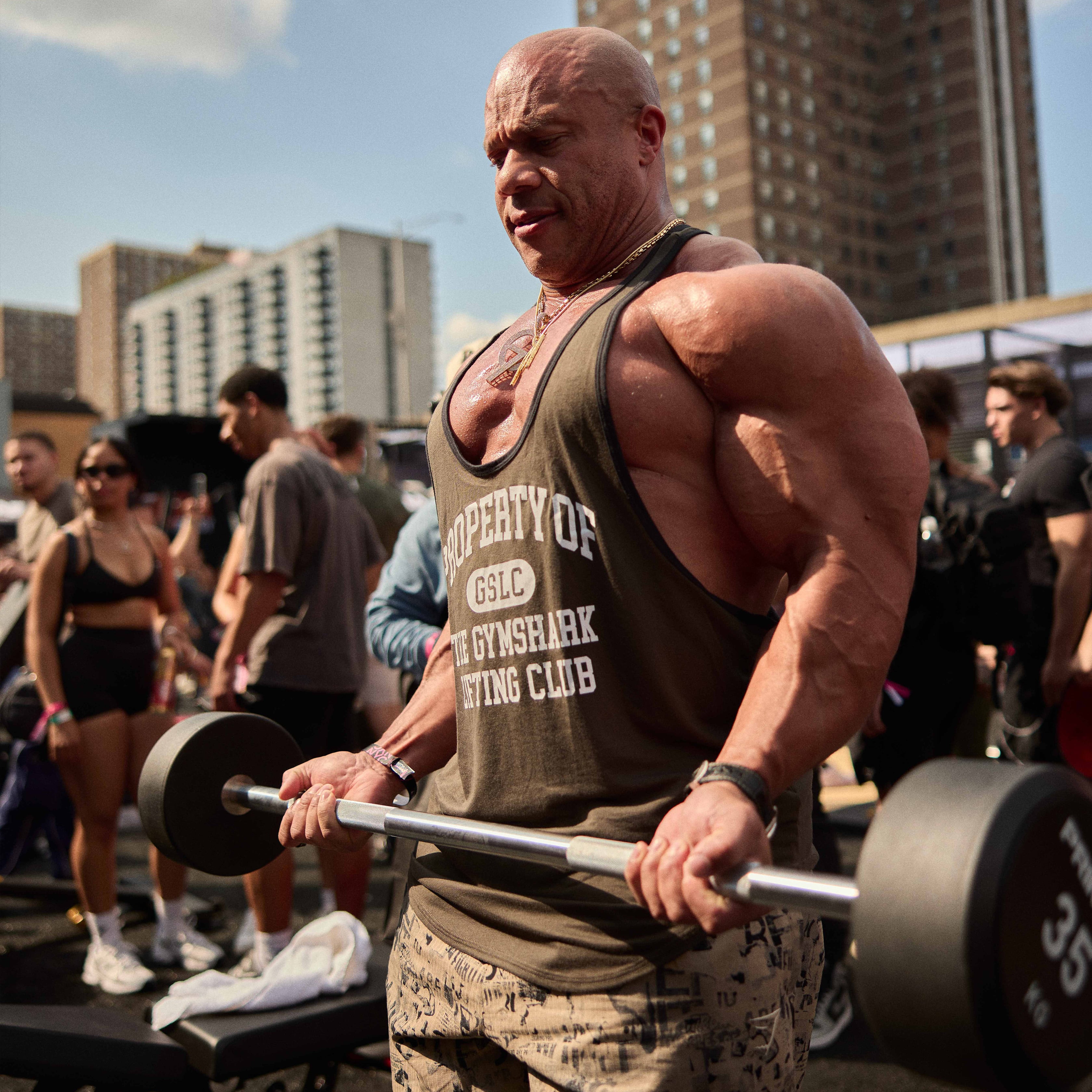
Big biceps, we all want them, right!?
One of the most popular arm exercises on the gym floor, the barbell bicep curl is a staple in many training programs, and if you’re looking for bigger, stronger arms – this is one to add to your arm day rotation.
But are you doing them correctly? Are you getting the maximum benefits from the barbell bicep curl? Maybe, and maybe not.
Let’s discuss what a Barbell Curl is, along with the benefits and variations for you to explore in your own training.
What Is A Barbell Curl?
The Barbell Curl is a gym exercise designed to isolate and target the muscles of the bicep, helping to develop strength and size over time. The barbell curl exercise gets its name from the curling movement created by contracting the bicep muscles to lift the bar, whilst keeping the elbows down by the side of the torso.
The Barbell Curl is one of the tried and tested biceps exercises for developing the muscle group, and is one of the best exercises for growing bigger, stronger arms.
What Muscles Does The Barbell Curl Work?
As with 99% of exercises, there a multiple muscles involved to create the movement – this is no different when it comes to training your biceps. There are three main muscles targeted when doing the barbell curl, they are;
Biceps Brachii (Short Head & Long Head)
The Long head is located on the outer side of the arm.
The Short Head is located on the inside of the arm.
Together, the Biceps Brachii work to flex the elbow joint - which is why the curl motion of a barbell curl helps target them directly.
Brachialis
The Brachialis sits deeper in the arm than the Biceps Brachii, and therefore is less visible. However, this muscle plays a key role in the flexion of the elbow, and, when developed, will help push up against the Biceps Brachii for bigger arms.
Brachioradialis
A bit of a mouthful, but it's worth knowing about. Located on the thumb side of your forearm, the Brachioradialis flexes the forearm at the elbow, and helps stabilize the arm, assisting during flexion and gripping of objects.
The Barbell Curl
The straight barbell bicep curl is arguably the most common variation of the barbell curl exercises. Although it may look simple, there's plenty to consider to ensure sufficient tension in the biceps muscle and proper form to help prevent injuries.
Performing the Barbell Curl in a standing position can engage our core and make it easier to get into the starting position for the exercise.
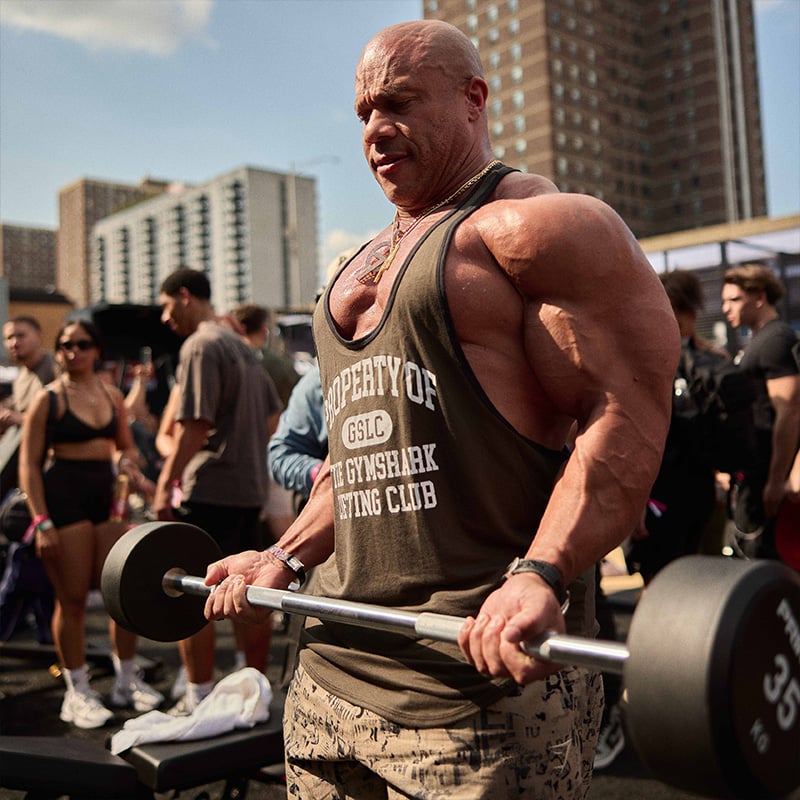
One cue that can help you connect with your biceps is to stop thinking about pulling the weight with your hands. Sam Sulek, IFBB Pro Bodybuilder, focuses instead on imagining that his biceps are pulling his wrists towards his shoulders.
Instead of pulling from my hands, I'm pulling from, like, the lowest section of my forearms.
It might feel strange at first, especially if you're used to thinking about your grip as the main driver of the movement. Sam compares it to everyday movements like writing with a pen: "When you think of writing with a pen, you're not thinking about activating your wrist, right? You're thinking of your fingers because that's just how we usually do things."
For him, developing this mind-muscle connection is something that'll come with practice. Using a lighter weight can also make it easier to focus on the biceps and get used to the movement without your grip or momentum taking over. As you get more comfortable with the cue, the goal is to make the curl feel like a movement initiated by the biceps rather than simply lifting the bar from point A to point B.
How To Do A Barbell Curl
Start with a light weight, grip the bar shoulder width apart with your palms facing away from you (remember to lift up the bar with a straight back).
Once you’ve picked up the bar, allow it to hang with your arms straight, and elbows by your side – maintaining a stable stance, knees slightly bent and shoulder blades retracted.
Keeping your elbows in the same position (by your side), contract your biceps and curl the bar upwards through a full range of motion.
Keep your back in a neutral position, with your shoulder blades pinned back throughout the whole movement. Once you can’t bend your arms any further, slowly return the bar to the start position. This is one rep.
Barbell Curl Vs. Dumbbell Curl: What’s The Difference?
The main difference between these two biceps exercises is how you load each arm. The barbell curl connects both hands to the same bar, meaning both biceps work together to lift the weight. With dumbbell curls, each hand holds its own weight, allowing you to work each arm independently.
This can make dumbbells particularly useful for addressing muscular imbalances. When you curl with a barbell, your stronger arm may naturally do more of the work if one side is stronger than the other. With dumbbells, each arm has to move its own weight, so the stronger side can't compensate for the weaker one as easily.
Sam Sulek, IFBB Pro Bodybuilder, prefers dumbbells for this reason. "If you're using dumbbells and each hand has maybe 30 lbs, if one arm's a little stronger, it's not going to help the weaker one. So, by loading them individually, I think you can help balance things out."
Dumbbells also give you more freedom to train one arm at a time, which can make it easier to identify and work on differences between your sides. As Sam points out, these imbalances can be obvious to you even when other people wouldn't notice them.
That doesn't make dumbbells inherently better than barbell curls. Barbell curls allow both arms to work together and make it easy to load both biceps with a single weight, while dumbbells offer more independence and versatility. Both have a place in a well-rounded biceps workout.
3 Barbell Curl Variations
Variety is the spice of life, and that also applies to your training.
Applying stress and tension to your muscles in different ways can help them gain strength and size, so be sure to add some of these barbell curl variations to your arm training rotation to keep those muscles guessing!
Let's explore the variations, and how to do each exercise.
The Reverse Bicep Curl
The Reverse Bicep Curl can be done with many pieces of equipment, in this instance, we’ll keep on topic with the use of a barbell.
Utilizing reverse grip exercises in your training is a great way to target muscle groups in different ways along with challenging your grip strength.
Remeber above where we mentioed the Brachialis?... The muscle that sits underneath the biceps brachii – well the reverse bicep curl helps to target this muscle, deep within the biceps helping improve strength and overall size within the biceps.
How To Do A Reverse Barbell Curl
The reverse barbell curl is a very similar exercise to the regular barbell curl, besides the way your grip the bar.
Start with a lightweight, grip the bar shoulder width apart with your palms facing towards you (remember to lift up the bar with a straight back).
Once you’ve picked up the bar, allow it to hang with your arms straight, and elbows by your side – maintaining a stable stance and soft knees.
Keeping your elbows in the same position (by your side), contract your biceps and curl the bar upwards through a full range of motion.
Once you can’t bend your arms any further, slowly return the bar to the start position. This is one rep.
The Barbell Preacher Curl
The barbell preacher curl makes use of a bench or specific preacher curl bench.
This exercise can be done seated or standing, with the key difference being the support at the back of the arms from the preacher bench. This support helps prevent unwanted movements, such as swinging, keeping the exercise more controlled and allowing you to focus on the biceps throughout the movement.
Sam Sulek, IFBB Pro Bodybuilder, particularly likes the preacher curl for this reason. “It’s a very controlled movement. A preacher makes it easy because everything is completely stable, and I’m only trying to send signals from my brain straight into my biceps, and it’s just easier to focus on.”
The barbell preacher curl can be completed with a straight bar, or an EZ bar for an adjusted grip.
How To Do A Barbell Preacher Curl (seated)
Start with a light weight and grip the bar shoulder width apart with your palms facing away from you.
Pick the bar off the preacher bench rack, using your feet to provide stability whilst sat on the preacher bench.
Keeping your elbows in the same position (against the preacher bench support), contract your biceps and curl the bar upwards through a full range of motion.
Once you can’t bend your arms any further, slowly return the bar back to the bottom of the movement. This is one rep.
The EZ Bar Curl
Another extremely popular bicep exercise, for good reason, is the EZ Bar Curl. This bicep exercise utilizes a different type of bar, called the EZ Bar. This unique bar typically has both a wide and a narrow grip for bicep curls. The angle of the bar can also feel more comfortable on the wrists for some people while still allowing you to load the biceps effectively.
Sam Sulek, IFBB Pro Bodybuilder, also prefers the EZ barbell curl instead of the standard barbell for this reason: "Just because sometimes it'll be a little tense on your wrists because it's so bent, like all the way straight instead of a little camber (with the EZ bar)."
Sam also takes a slightly different approach to his tempo on the EZ barbell curls. Rather than slowing down every rep and focusing on a hard squeeze, he prefers a faster, pumping style with a little controlled momentum.
With a barbell curl or an EZ bar curl, I like getting a little bit of swing into it just because I'd almost call it a pumping style instead of a light controlled super-squeezing rep, which is still good. It's just a little faster. I feel like if I do a few EZ bar curl reps quick, I feel like I've got a sponge underwater and I'm just squeezed and opening it up and it just siphons blood in the area.
How To Do An EZ Barbell Curl (Standing)
Start with a light weight, grip the bar shoulder-width apart with your palms facing away from you (remember to lift the bar with a straight back).
Once you've picked up the bar, allow it to hang with your arms straight and elbows by your sides – maintaining a stable stance, knees slightly bent, and shoulder blades retracted.
Keeping your elbows in the same position (by your side), contract your biceps and curl the bar upwards through a full range of motion.
Once you can't bend your arms any further, slowly return the bar to the start position. This is one rep.
Tips:
You can vary the grip to place a greater emphasis on different muscles within your biceps. With a narrow grip, you'll target more of the long head of the biceps (outer side of the arm). With a wide grip, you'll place more emphasis on the short head (inner part of the arm).
Keep your back in a neutral position, with your shoulder blades pinned back throughout the whole movement. You can add a little swing as Sam Sulek does, but don't overdo it. Keep the movement controlled, focusing on your biceps doing the movement.
-
Now you're armed (excuse the pun) with the tools you need to hit those biceps the right way, with correct form across multiple barbell curl variations.
Put them to the test, and challenge your biceps in new ways.