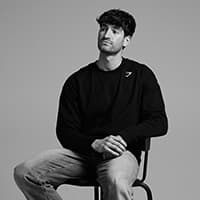
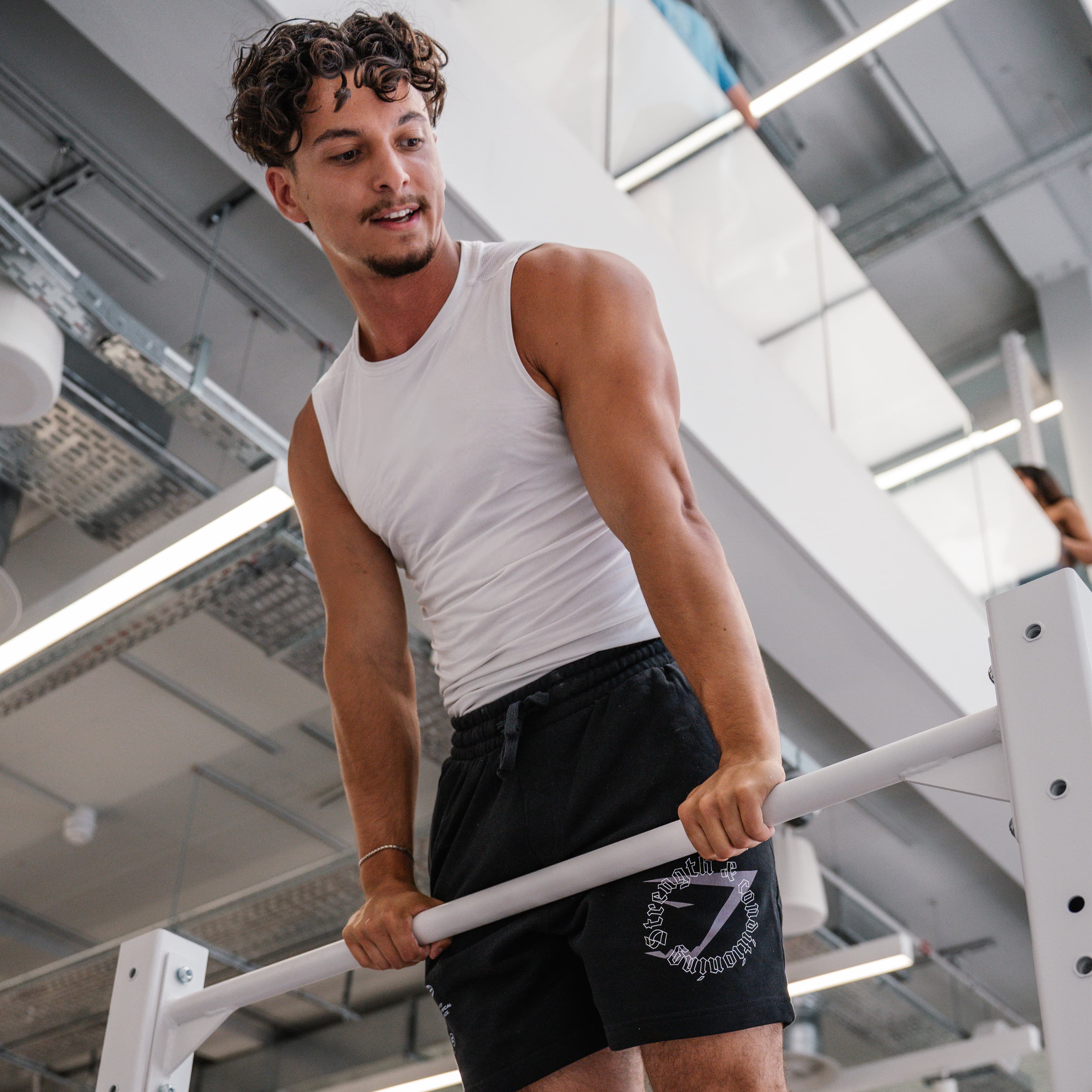
Sulek is chasing every gain he can get to reach his best physique. You’ll never see him neglect a muscle during his workouts - not even forearms, which for him are “up there with some of the most neglected muscle groups.” So much so, that he now dedicates specific time to train his forearm muscles - and if you’re here, there’s a high chance you’re after the workout.
Forearms won’t make you win a bodybuilding competition like Olympia, but they’ll definitely make your arms look bigger and more defined. Strong forearms will also indirectly improve your wrist stability, elbow strength, and general grip the more you work them. You don’t have to dedicate 2 hours to training them, but as Sam Sulek mentions repeatedly throughout his online content: your “forearms deserve some love too”.
Now, let's be honest: when was the last time you actually trained your forearms? If you can't remember the last time you felt that kind of crazy burn across this muscle group, it's time to change how you train. So let’s not leave them in the low-priority list of muscles - instead, give his forearm workout a go.
Who Is Sam Sulek?
If you’re an avid gym goer and you’ve never ended up on one of Sam’s TikToks or YouTube videos, there’s probably a bug in the matrix or in your algorithm (the bodybuilder even has a whole subreddit to his name (r/SamSulek) with people discussing his bodybuilding shows and physique ). Especially since he’s pretty much is the new face of bodybuilding in the US.
Sam Sulek recently joined our Gymshark Athlete roaster, teaming up with David Laid and Chris Bumstead, creating the “freaking trifecta” (his words, not ours). Sam doesn’t have as many trophies as Bumstead yet, but he is winning fast... He took first place at the 2025 NPC Arnold Amateur and won his IFBB Pro Card. This year, he competed at the 2026 IFBB Arnold Classic, but unfortunately didn’t make podium. He did however, prove he can hang with the pros… and did we mention that he’s only in his early twenties?
Three years ago, he started sharing his bodybuilding journey on YouTube and now has over 4 million subscribers. Known for his simple, raw and honest videos: from car talks to intense gym sessions and even grocery trips, the content you’ll find on his social accounts is focused on real old bodybuilding content - that’s all he’s about.
Sam Sulek’s Favourite Forearm Exercises & Workout Routine
Sam Sulek’s training program changes based on his upcoming shows and competitions, which is why he alternates between offseason bulks and pre-show cuts. For his actual workout split, he sticks to a 4-day routine. He keeps his sessions simple and effective, a principle that applies to his forearm workouts. No need to spend all day in the gym, just a few basic exercises that’ll give you a crazy burn and serious results.
When breaking down his forearm routine, Sam explained that “it boils down to three movements.” He targets both wrist flexors and extensors, and finishes his sessions with an exercise that’ll give him a good pump. To achieve this, his routine relies heavily on different variations of curls and pushdowns. His goal? Having forearms that look big and shredded once he leans out for the stage.
To see how he structures his forearm workouts, here’s an example he did a few days after competing at the Arnold Classic UK:
Single-Arm Pronated Dumbbell Forearm Curls – 8 sets of 15–20 reps
Single-Arm Supinated Dumbbell Forearm Curls – 4 sets of 20 reps
Behind-The-Back Barbell Wrist Curls – 3 sets of 20 reps
Single-Arm Cable Forearm Pushdowns – 2 sets of 20 reps
While this workout looks like a lot, these quick exercises go by fast. You can easily do this routine on a rest day, or wrap it up at the start or end of a short workout with your abs.
His 5 Favourite Forearm Exercises Explained
1. Single-Arm Pronated Dumbbell Forearm Curls (Wrist Extensions)
Often used as the very first exercise of his workouts, the single-arm dumbbell pronated forearm curl will work your wrist flexors by focusing on wrist extension (pulling the wrist up).
How To Do Them?
Sit on a bench with your legs on each side and place your forearm flat against your thigh, so that your wrist hangs just past your knee. Your palm should be facing down toward the floor (in a pronated position).
Hold a dumbbell with the weight of your choice, ”Not too heavy, not too light. If you go too heavy, you’re just going to hurt your wrist, and then you’re not even going to feel it.” Lower the weight slowly by bending only at your wrist, allowing your knuckles to drop toward the floor.
Use your forearm muscles to lift the weight back up by raising your knuckles as high as possible toward the ceiling, holding the contraction for 2-3 seconds at the top, then repeat.
Sam Sulek’s Pro Tip:
Forget about ego lifting, start light. Wrist extension isn’t a strong action, so you don’t have to grab the biggest dumbbell from the rack. Even Sam uses a light dumbbell for this one, because if you go too heavy, you’ll just end up injuring your wrists. Focus on a mind-muscle connection with good form, and gradually build intensity to keep your joints healthy. As Sam warns: “This is not the lift to go ego lift with. A lightish weight, just enough to get this kind of portion of the back of your forearm burning, and you should start to see it develop.”
2. Single-Arm Supinated Dumbbell Forearm Curls (Wrist Flexions)
This exercise is similar to the first one, but this time you’ll focus on the flexion of the wrist: moving the wrist down to target your wrist flexors. The single-arm dumbbell supinated forearm curls will balance out the pronated ones, which target the wrist extensors more. As Sam says, "It's not the most flashy movement, but this really gets your forearms going."
How To Do Them?
Sit on a bench with your legs on either side and rest your forearm flat along your thigh or across the bench, palm facing up toward the ceiling (supinated). Sam says, “Your forearm is supported, but your hand is hanging off the edge. […] Now the dumbbell is pulling my hand down, and I’m fighting against it with this curling action.”
Hold the dumbbell and slowly lower it by relaxing your wrist and letting your palm open slightly. Close your hand into a tight grip and use your forearm muscles to curl your wrist upward, bringing the weight up as high as possible. Squeeze the contraction at the top before slowly lowering back down.
Sam Sulek’s Pro Tip:
Unlike extensions, your flexors can handle heavy loads, but don't overdo it. Sam opts for 50-pound dumbbells, noting: "I think this movement lends itself to going as heavy as you can, but there's no point in trying to push to the 150s or the 130s. Your forearms are super strong. But that kind of weight is just unnecessary.”
3. Straight Bar Cable Forearm Pushdowns aka the Sulek Curls (or Meows Meows)
This movement is the famous, so-called "Sulek Curls" or "Meow Meows" on names on TikTok due to the cat-like pawing motion. So if you love cats (maybe Sam does too), that's your sign to try this exercise. It will mainly help target the lower portion of the forearms using a cable machine.
What Are The Sulek Curls?
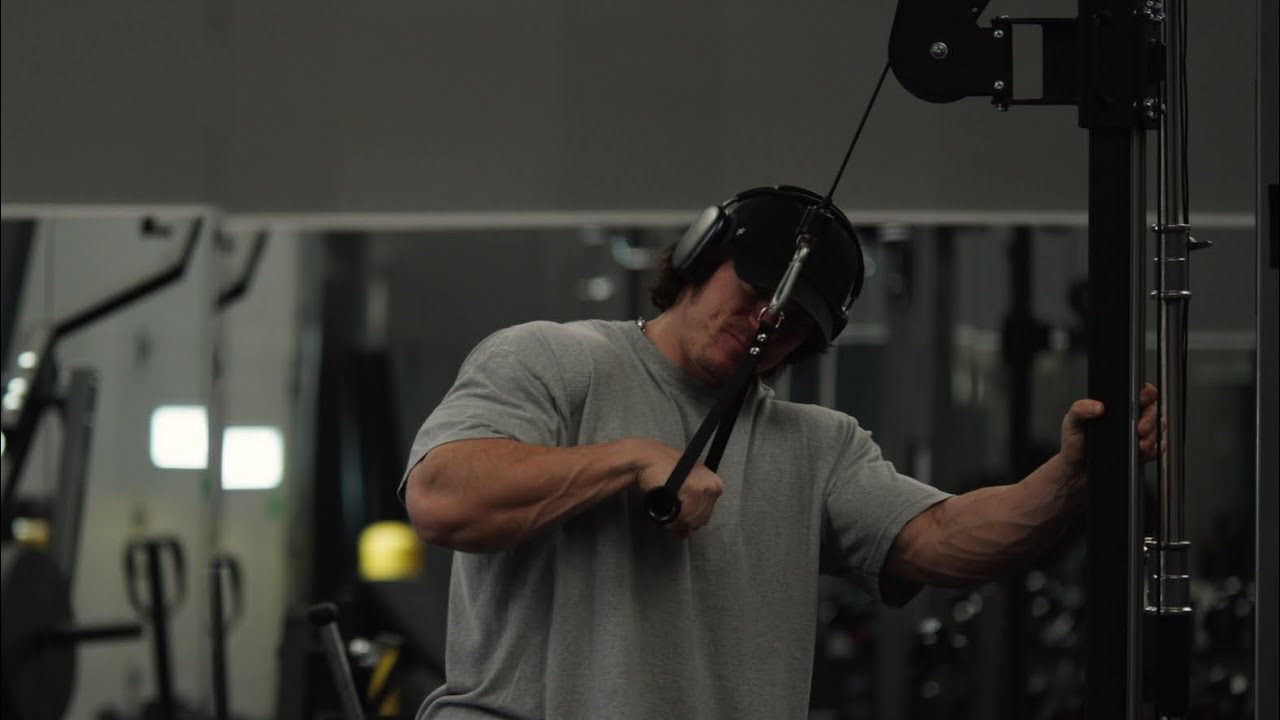
Sulek Curls (or meow meows) are essentially pronated wrist curls using a straight bar on a cable. It’s almost like doing tricep pushdowns with a straight bar, but instead of extending your elbows, you only flex your wrists down, which is why that wrist-only movement looks a bit like a cat playing with its paws.
How To Do Sulek Curls?
Stand facing a cable machine with the cable set to a high or upper-mid position, picking a straight bar attachment. Grip the bar with a standard overhand (pronated) grip, keeping your hands roughly shoulder-width apart to ensure a natural arm angle.
Keep your elbows tucked against your sides and slightly lean your upper body forward over the bar to lock your arms into a fixed position. Your forearms should be bent upward at the starting point, holding the cable's tension.
Keeping your arms locked, focus on your wrists and forearms to press the bar down toward the floor until your wrists are fully extended. Squeeze your forearms hard at the bottom of the movement, then control the weight back up to the starting position.
Sam Sulek’s Pro Tip:
Treat this as a pump finisher rather than a strength movement. Sam explains: “This is like the fly of forearms. Here, I’m more so concerned with just maximising how pumped my forearms are and what kind of burn I can achieve. This is more about enduring the kind of burning that you’re going to feel on that whole bottom side.”
4. Single-Arm Cable Forearm Pushdowns
This unilateral variation of the Sulek Curl is Sam's absolute "bread and butter of the bottom side." It allows you to isolate each arm independently to correct (potential) imbalances. Sam Sulek tends to do them "for the sake of pumping up my forearms at the end."
Those forearm pushdowns will mainly work your wrist flexors, as the movement emphasises wrist flexion (pushing it down). Choose a weight that is heavy enough to challenge you, but light enough to let you completely lock out and flex at the bottom. Sam tends to go for a weight so he can be "able to really squeeze at the bottom, which is kind of half the benefit of the cable."
How To Do Them?
Stand sideways to a cable positioned around shoulder height or slightly higher. Brace your non-working hand against the cable structure for stability, and grip the cable handle using an overhand or neutral grip.
Lock your working arm's elbow tightly against your torso, keeping your forearm bent upward to take up the cable's tension. Your upper arm should remain completely static throughout the exercise.
Using only your wrist and forearm strength, press the handle down toward the floor until you fully extend your wrist. Squeeze your forearm muscles hard at the bottom of the movement before controlling the handle back up to the starting position.
Sam Sulek’s Pro Tip:
Focus heavily on the peak squeeze and high volume. Sam takes each side straight to failure, often hitting around 30 reps. He stresses the importance of mind-muscle connection over speed: "At the squeeze flex portion of pretty much any set, if you give it a little extra focus and instead of just doing reps real quickly at the bottom, you have a very like distinct extra, like you send that signal, that's going to add up. […] But by putting a little more tension through my forearms, I think it adds up to a better set, a better pump, right? Better gains."
5. Behind-The-Back Barbell Wrist Curls
While not in every single one of his forearm workouts, Sam Sulek uses this barbell movement when he wants to overload his wrist flexors with heavy weight. It will mainly target the wrist flexors as you curl the bar toward your palms. It’s also one of the only barbell exercises that he does to work his forearms.
How To Do Them?
Sit on the edge of a bench with a loaded barbell resting behind you and under your legs. Reach back and grip the barbell with an overhand grip (your palms facing behind you), keeping your hands roughly shoulder-width apart.
Lift the barbell slightly to clear the bench, letting your arms hang straight down behind your torso. Keep your shoulders rolled back and your posture upright, ensuring your arms remain static so that only your wrists move.
Slowly lower the barbell by opening your wrists and allowing the bar to roll down. From there, close your hands into a tight grip and curl your wrists upward as high as possible, squeezing your forearm at the top before repeating.
Sam Sulek’s Pro Tip:
Be prepared for the hardest part of the movement to be the top part. The reason? It's cause it's where the contraction happens, Sam notes: "It's really freaking heavy at the top. Like, I can do a few little baby partials at the bottom, but it feels more like I'm pulling the weight up with my forearms instead of just like, you know, doing a forearm curl. If you kind of feel me, you know, a little tricky, but definitely a heavy movement.”
Sam Sulek’s Forearm Split
Because a competitive bodybuilder requires perfect symmetry, Sam intentionally balances his training volume between the front and back of his forearms. He compares the anatomy of a forearm to the flat of a chicken wing to visualise his gains goals…
So starting with the reverse side, right? Everybody knows this. This is kind of like classic forearm meat, but you’ve also got stuff back here [bottom part by the elbow joint]. How I kind of imagine it is you’re looking at the flat of a chicken wing, right? You get the top side, then you get the bottom side. So, I want my forearms to thicken up in both ways. But detail-wise, having the back of your forearm developed, it’s pretty freaking cool, right?
To hit both sides of the "chicken wing" (forearm) without tiring out his main muscles, Sam Sulek changes which days he trains his forearms each week. Depending on his current recovery capacity and seasonal goals, you will usually find him pairing forearms using one of these combinations:
Forearms and Calves
Forearms and Shoulders
Forearms and Back
Forearms and Arms
Forearms and Triceps
Forearms only
If you're about to do your cardio on the treadmill, give Sam's YouTube video below a go to see how he trains his forearms and combines them with shoulder exercises. 👇
Why Should You Train Your Forearms? (According to Sam Sulek)
There are quite a few reasons why you should train your forearms:
Stronger grip: In sports like BJJ, climbing, or tennis, your hand is the primary point of contact. If your grip fails, the rest (technique, etc.) will likely fail too. By training your forearm, you’ll increase the force you can apply when gripping something (your racket, the boulders, etc.) and you improve your ability to recruit the right muscle fibres as well.
Better stability: on big lifts like
deadlifts, cleans or muscle-ups, your forearms help hang onto the bar and secure your lifts. By strengthening them, you prevent the bar from rolling in your hands and improve your ability to keep your wrist stacked.
Injury prevention: strengthening the wrist extensors also improves tendon capacity around the elbow, reduces pain, and improves function in conditions like tennis elbow. This indicates a protective, stabilising role of strong forearms around the wrist and elbow joints [4, 5].
Etc.
Beyond the aesthetic benefits, training your forearms can also help with your compound lifts. While we dive deep into these benefits in our dedicated Forearm Exercises blog post, Sam Sulek highlights another aspect that many lifters overlook.
For him, building massive forearms is also about maintaining a proper form and stability when lifting heavy loads. He notes that having strong forearms stabilises major movements like the bench press, especially when you are trying to handle 150-pound dumbbells. Without that baseline strength, weak wrists can completely give out. Investing time into your forearm training can help you create a stronger foundation that protects your joints and keeps your presses stable.


Key Takeaways
It's not because your forearms are a smaller muscle group than your chest or quads that you have to neglect them. Because if you really want to grow them, as Sam Sulek does, you need to treat them like any other muscle. This includes a full range of motion, applying progressive overload, enough sets throughout the week, etc. Sam supports that:
You know it doesn't take much, but it does take direct work. You're not just going to suddenly start making serious forearm gains, just like you shouldn't expect to make crazy chest gains if you're not hitting your chest that hard, so your muscle is a muscle, no matter where it is on your frame. If you want to grow it, you've got to work it.
So, don't neglect your forearms; they can make a big difference in a physique. That's why Sam Sulek trains them. He knows they can make his arms look even bigger and more detailed on the scene. So give his forearm workout a try and feel the pump.
FAQs | Sam Sulek Forearm Workout
What Forearm Exercises Does Sam Sulek Do?
Here are the main forearm exercises Sam Sulek does:
Single-Arm Pronated Dumbbell Forearm Curls
Single-Arm Supinated Dumbbell Forearm Curls
Straight Bar Cable Forearm Pushdowns (the Sulek Curls)
Single-Arm Cable Forearm Pushdowns
Behind-The-Back Barbell Wrist Curls
Do You Need A Forearm Day?
Depending on your current workout split and goals, you may not need a specific forearm day. Your forearms can get indirect muscle volume through other exercises during your training week: especially on pulling movements (rows, curls, deadlifts, etc.).
You can choose to add a few exercises at the end of a quick session, such as after an ab session or a calf workout. If you have more time to spend at the gym and you really want to grow your forearms, then you can include a forearm day in your split. But don’t forget to give your muscles some rest between each session.
Should You Hit Your Forearms Till Failure?
You don’t need to hit your forearms to complete muscular failure, but you should be close to it. A research confirms that training close to failure (within 0–3 reps of it) is a key driver of hypertrophy [1].
Forearms are considered a “stubborn” muscle group. They need high-intensity stimulus to respond. They’re also a high-endurance muscle group, so you need to train them to failure on isolation exercises. Here’s what Sam Sulek recommends based on what is working for him:
"By the time I get to like 15 or so, I’m going to be on fire. I’m not necessarily going to take it to complete muscular failure; this is just doing a solid amount of damage, kind of a crewing work, you know, but this is where your forearms are going to grow. My forearms saw the most gains when I did this on a consistent basis."
How Many Sets And Reps? Sam Sulek Recommendation
The number of sets and reps will mainly depend on your training experience. If you’re a beginner, you’ll need around 6 weekly sets and up to 15 weekly sets if you’re an advanced lifter. As your forearms tend to respond better to long sets, aiming for a 10 to 20-ish rep range should be your sweet spot. The reason is that they contain a mix of slow- and fast-twitch fibres. A meta-analysis confirmed that higher rep ranges (up to 30) produce equivalent hypertrophy to lower rep ranges, provided effort is equated [2].
When looking at Sam Sulek’s volume when training his forearms, he tends to do long sets with 20-ish reps. He also starts his workouts with 6 to 8 sets on his first exercise, then goes down with the following movements (around 2 to 4 sets). He keeps the reps quite high to get a good pump and burning feeling. Here’s his view on the rep range during his forearm workout:
"I’m aiming more so for a burn at the top of the back of my forearm, I don’t need to load a ton of weight, I’m not going to hit failure, by doing a six rep, max RIR intensity set of reverse forearm curls, but I will begin to really start feeling a burn, by doing even 20-25 rep sets with like a 10 (lbs) or even like a five and just sitting there doing one arm at a time. […] You should begin to notice reasonably fast forearm development."
References:
[1] Grgic, J., Schoenfeld, B. J., Orazem, J., & Sabol, F. (2022). Effects of resistance training performed to repetition failure or non-failure on muscular strength and hypertrophy: A systematic review and meta-analysis. Journal of sport and health science, 11(2), 202–211. https://doi.org/10.1016/j.jshs.2021.01.007
[2] Schoenfeld, B. J., Grgic, J., Van Every, D. W., & Plotkin, D. L. (2021). Loading Recommendations for Muscle Strength, Hypertrophy, and Local Endurance: A Re-Examination of the Repetition Continuum. Sports (Basel, Switzerland), 9(2), 32. https://doi.org/10.3390/sports9020032
[3] Schoenfeld, B. J., Pope, Z. K., Benik, F. M., Hester, G. M., Sellers, J., Nooner, J. L., Schnaiter, J. A., Bond-Williams, K. E., Carter, A. S., Ross, C. L., Just, B. L., Henselmans, M., & Krieger, J. W. (2016). Longer Interset Rest Periods Enhance Muscle Strength and Hypertrophy in Resistance-Trained Men. Journal of strength and conditioning research, 30(7), 1805–1812. https://doi.org/10.1519/JSC.0000000000001272
[4] Wen, D. Y., Schultz, B. J., Schaal, B., Graham, S. T., & Kim, B. S. (2011). Eccentric strengthening for chronic lateral epicondylosis: a prospective randomized study. Sports health, 3(6), 500–503. https://doi.org/10.1177/1941738111409690
[5] Chen, Z., & Baker, N. A. (2021). Effectiveness of eccentric strengthening in the treatment of lateral elbow tendinopathy: A systematic review with meta-analysis. Journal of hand therapy : official journal of the American Society of Hand Therapists, 34(1), 18–28. https://doi.org/10.1016/j.jht.2020.02.002