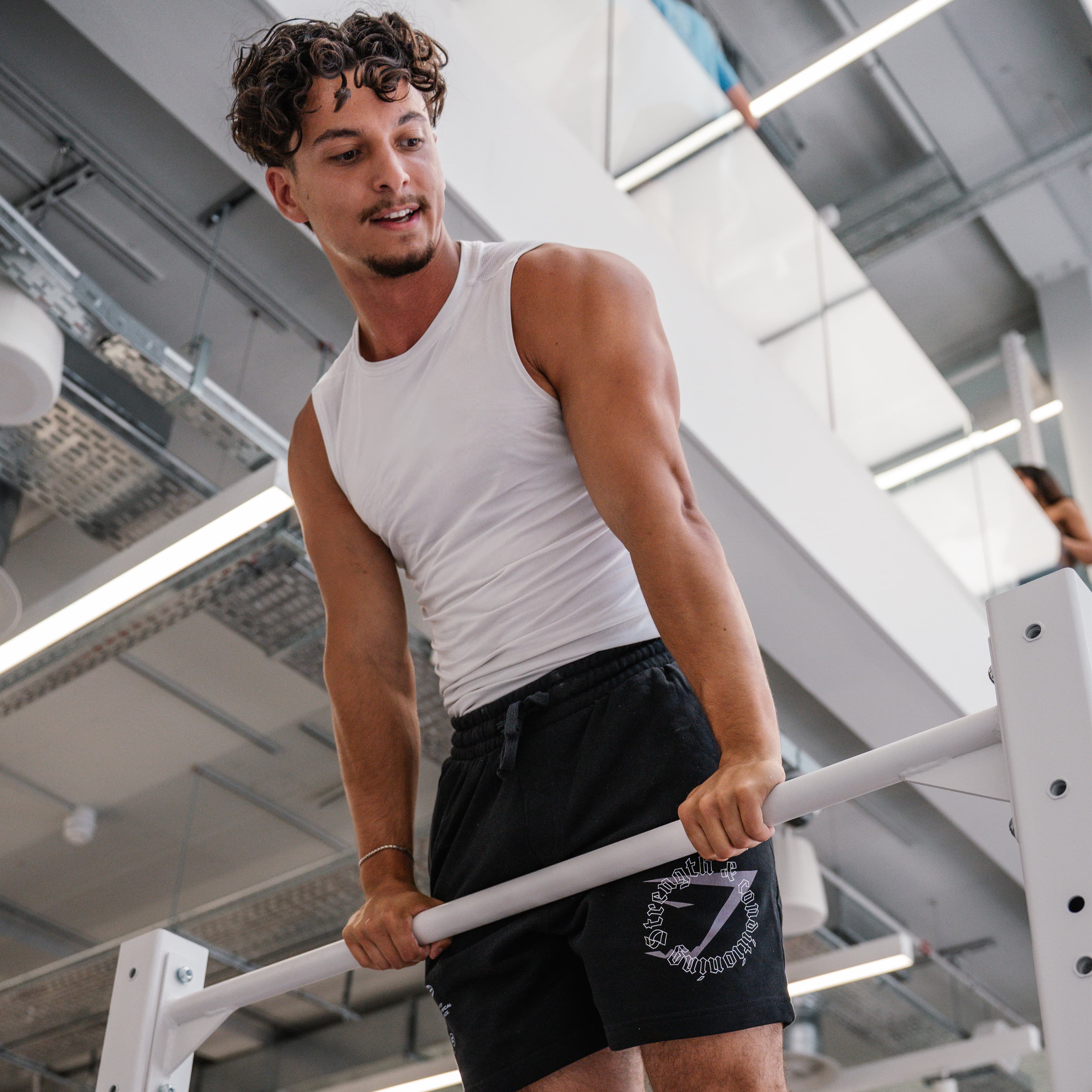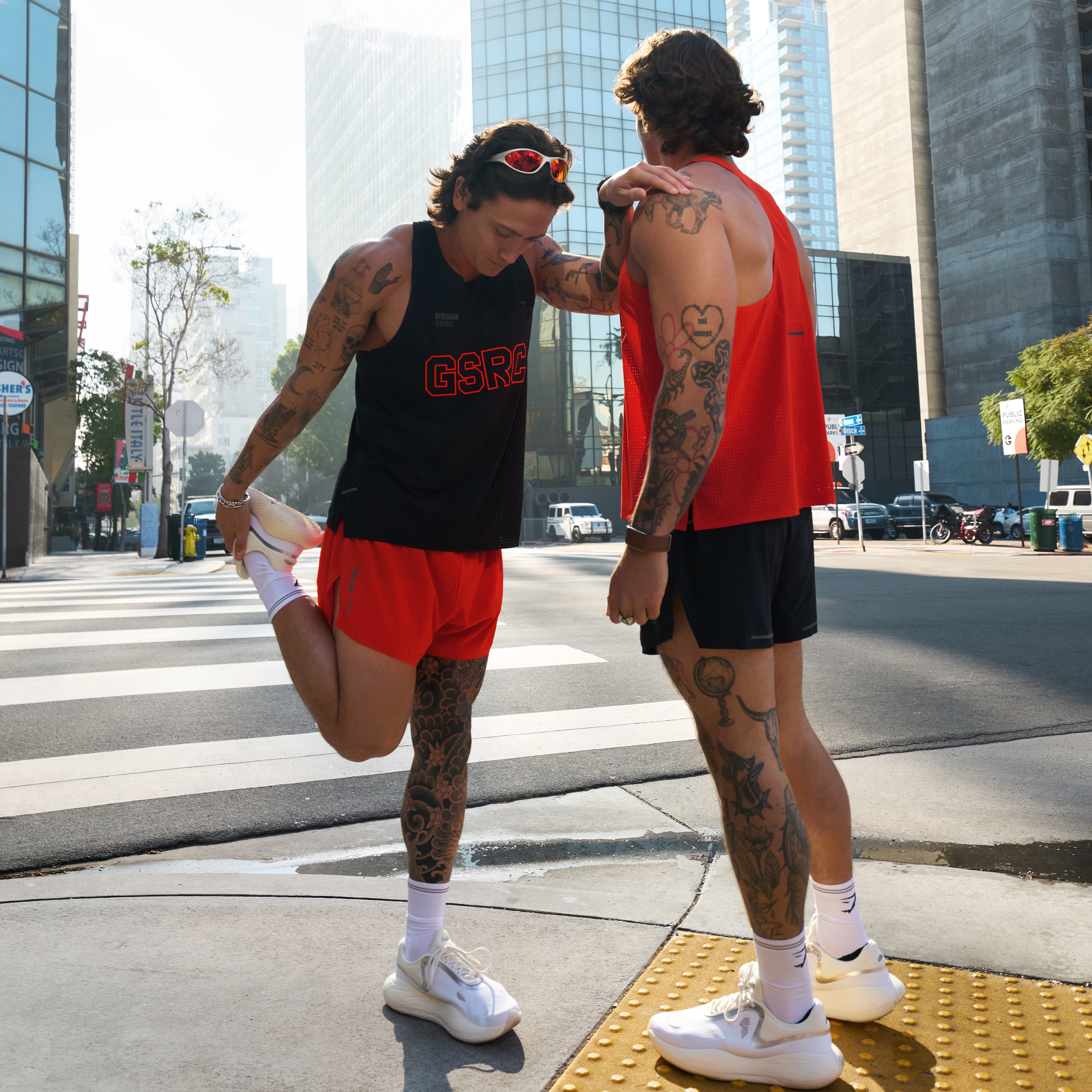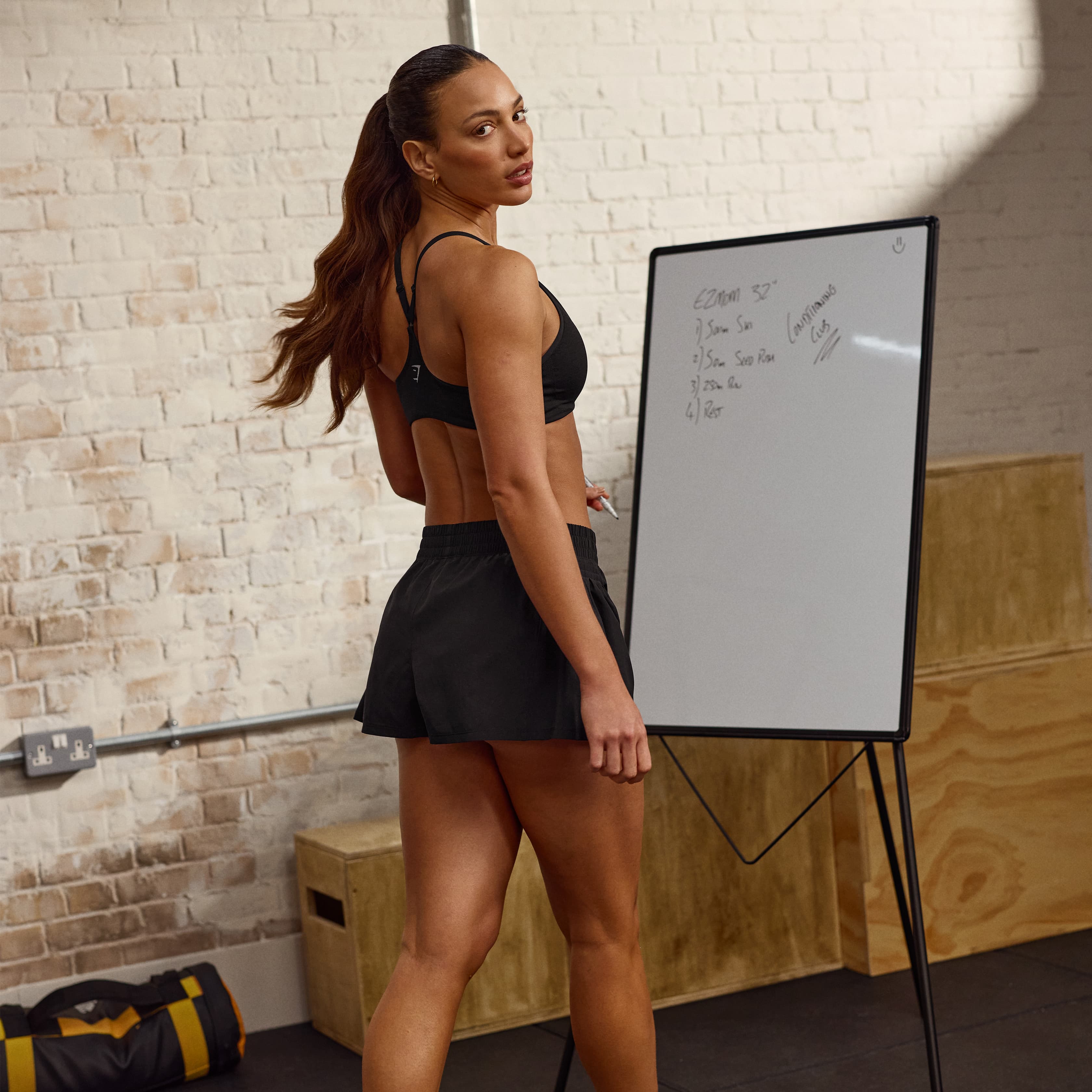



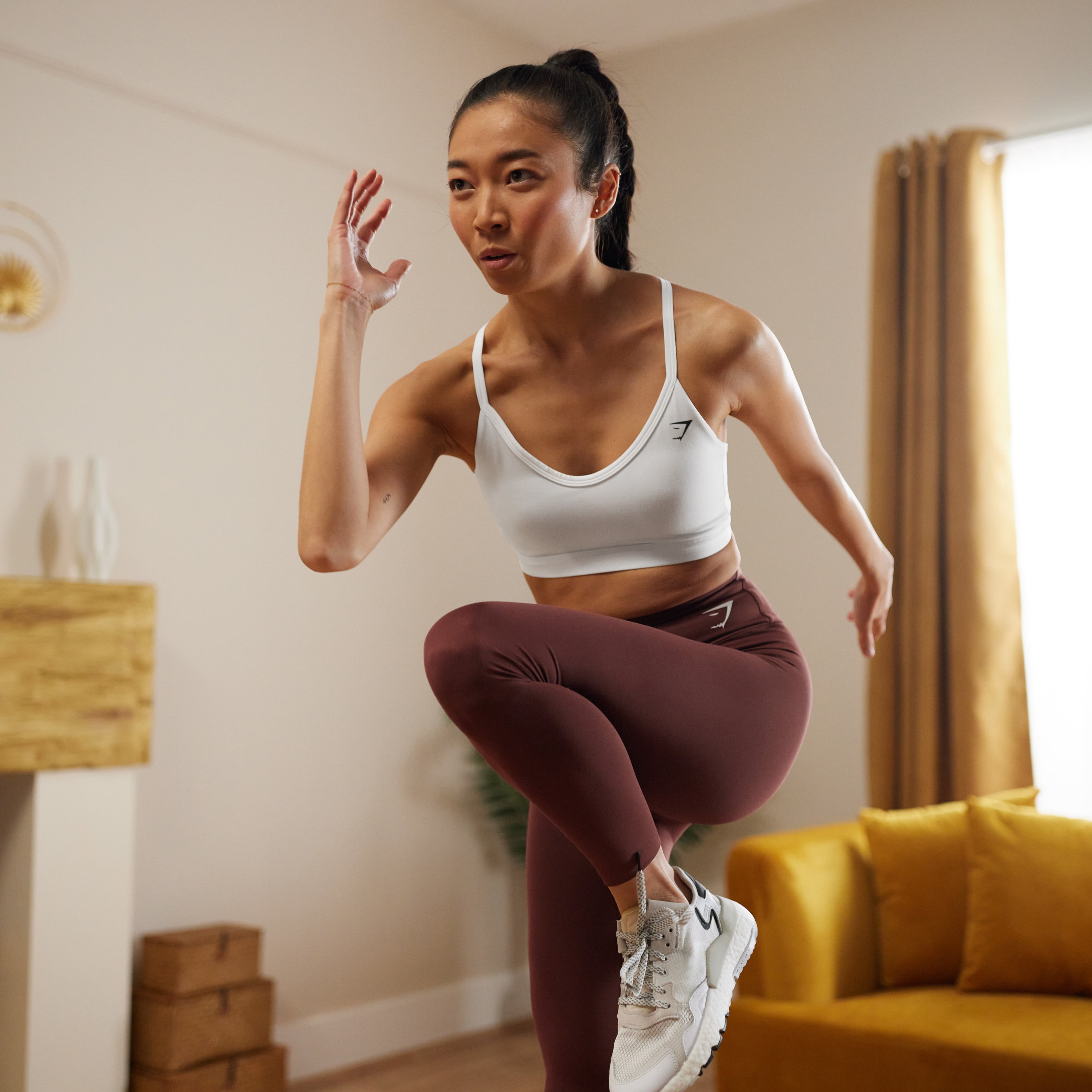
Slip out of bed, pop on your coziest rest day hoodie, and make yourself a cup of your favorite coffee. It’s AM exercise time – but we bet you can’t guess what sort of exercise we’re about to do: Yin yoga? Meditation? Wrong. It’s cardio time – but we’re doing it the cozy way.
‘Cozy’ and ‘cardio’ are probably two words you never expected to hear uttered in the same sentence, but it’s a trend that’s catching on, and we can see why.
On those days when you open the curtains and it’s just too cold to go outside or when the thought of turning up to a loud, sweaty, packed spin class is just too much – cozy cardio gives the option to get a sweat-on in a safe, friendly, familiar environment.
You may not be hitting the deck and doing 50 burpees in an intense HIIT workout, but this softer style of cardio will still see you breaking a sweat, and you don’t even need to step outside. Sounds great, right? If you’re looking to get started or are curious to know more, we’re going to cover everything from what cozy cardio is (and does it even work?) to how you can do your very own cozy cardio session.
We’ve got all the answers (and the outfits to go with them, too!).
It's cozy season, which means it's time to invest in some comfy loungewear–from buttery-soft leggings and tank tops that can withstand the sweatiest living room cardio sesh–not forgetting the oversized hoodies and supersoft joggers to pop on afterward.
What Is Cozy Cardio?
Forget beat-pumping, sweat-dripping, disco-lit sweat sessions – cozy cardio is a form of softer, calmer, and more comfortable exercise. But don’t be fooled: We may be in our joggers and comfy socks, but this is still a workout.
For Hope Zuckerbrow, who first coined the term on TikTok in 2022, #CozyCardio involves rolling out of bed at 5:15 a.m. and taking a 30-minute walk on her walking pad in front of whatever TV show she’s in the middle of binging. Take a scroll through TikTok, and you’ll see endless videos of women doing their own form of cardio while staying cozy in the comfort of their homes, including:
30-minute bike session
Yoga flow
A walking pad run (or walk, just like Hope)
What we’re trying to say is that there aren’t any set rules for what is or what isn’t cozy cardio – it’s different for everyone. As long as you’re cozy, comfortable, and getting a bit of a sweat on through movement, cozy cardio can be whatever you want it to be.
Why Are People Doing It?
Maybe we should be asking, ‘Why wouldn’t you want to do it?’.
Don’t fancy stepping out into the cold to head to the gym? Navigating a busy gym floor not a bit of you? Feel way too anxious to join a gym class on your own? There are a number of reasons people are joining in with this trend (ones that I’m sure we can all relate to at some point in our lives!).
One of the main groups cozy cardio appeals to is the ‘anxious girlies’—just like Hope. Cozy cardio gives women a way to add more movement into their lives in a safe environment with no equipment needed. But anyone can do cozy cardio, no matter their reason for wanting to do so.
Does Cozy Cardio Work?
As lovely as it sounds, we’ve got to address the elephant in the room: Does Cozy Cardio work? There are benefits and drawbacks to this exercise trend that you may want to consider:
Benefits Of Cozy Cardio
Anything that promotes increased movement is a positive. We’ve all experienced workout dread, period pains, or horrendous weather conditions that make us decide against stepping out of the house and venturing to the gym. Cozy cardio makes exercise inviting (and enjoyable!) – and it’s better than slumping on the sofa for the night.
For those who don’t feel confident going to the gym at all, cozy cardio makes exercise accessible, meaning you can enter your ‘fitness girl era’ from home. It can also be a good stepping stone to work up the confidence to go to the gym once you’ve built a baseline of fitness.
In the long run, cozy cardio does come with many benefits, too, from both a physical perspective (improving cardiovascular capacity, lowering resting heart rate, and burning fat) and a mental health perspective (yes, endorphins are still a thing at lower intensities, too!). In fact, research has proven there to be no difference between HIIT (high-intensity interval training) and LISS (low-intensity steady state) when it comes to fat loss and cardio health, and found strong links between reduced depression for low to moderate exercise, but not for high-intensity [1, 2].
Drawbacks Of Cozy Cardio
So, is cozy cardio enough? Sadly, maybe not in the long run.
The US Department of Health and Human Services recommends a minimum of 150 minutes of moderate-intensity physical activity per week (or at least 75 minutes of vigorous activity) and strength training for all major muscle groups at least two times a week [3].
Depending on the form of your cozy cardio routine, you may not be including enough strength training. Strength training is particularly important to combat weakness and frailty as we age, improve bone density, and reduce the risk of osteoporosis and other health conditions [4].
Further to that, numerous studies have been done on the benefits of high-intensity exercise. Harvard University Medical School found that even short bursts of vigorous exercise were associated with lower mortality rates, lower risk of developing heart disease, and decreased risk of cancer [5]. Vigorous exercise also improves overall fitness, making even daily tasks such as walking up the stairs easier [6].
So, How Should You Be Doing Cozy Cardio?
Cozy cardio can be extremely beneficial – when done right!
If your cozy cardio is a slow 20-minute walking pad stroll a couple of times a week, you should consider adding some other forms of exercise into your routine. Ideally, you want to ensure your week includes some form of high-intensity exercise – whether that’s a run, at-home HIIT workout, or a gym class.
If you’re working out from home, try adding some bodyweight strength work (we love doing these bodyweight glute exercises) or resistance band training to your routine.
. . .
What Should I Wear For Cozy Cardio?
When it comes to what to wear, there’s only one rule: It has to be cozy. No exceptions.
Luckily, we’ve put together a list of our best cozy workout outfits – ideal for a cozy cardio morning or nighttime sesh:
Do you wear a sports bra for cozy cardio?
This is totally down to personal preference and depends on what form your cozy cardio takes – but even if you’re just doing a light hot girl walk, you probably want a little bit of support…
Light-support sports bras are ideal for any light activity. They provide enough support to keep everything in place, while the soft fabric makes them super comfy and allows the breasts to move naturally. From the Minimal Sports Bra that the lifting girlies swear by to the intricately designed Elevate Twist Front Bralette with buttery soft fabric, there’s the right light support sports bra for every style.
You might be interested in: How to find the right support sports bra for you.
The Verdict
Whether you’re just entering your fitness era or you’re a seasoned workout girl looking for an easy way to add some extra movement to your week, there’s no denying that cozy cardio can be an effective way to increase your movement in an enjoyable, accessible way.
That being said, we think it works best alongside other exercises—e.g., running, gym classes, or even some slighter, higher-intensity home workouts. But there’s no doubt that any movement is positive – and if we can make it enjoyable at the same time and do it in our comfy clothes, then it’s a win-win if you ask us!
References:
Foster, C., Farland, C.V., Guidotti, F., Harbin, M., Roberts, B., Schuette, J., Tuuri, A., Doberstein, S.T. and Porcari, J.P. (2015). The Effects of High Intensity Interval Training vs Steady State Training on Aerobic and Anaerobic Capacity. Journal of sports science & medicine, [online] 14(4), pp.747–55. Available at: https://www.ncbi.nlm.nih.gov/pmc/articles/PMC4657417/.
Smith, L. (2024). Low intensity exercise linked to reduced depression - ARU. [online] www.aru.ac.uk. Available at: https://www.aru.ac.uk/news/low-intensity-exercise-linked-to-reduced-depression [Accessed 13 Jun. 2024].
Laskowski, E. (2019). How Much Exercise Do You Really need? [online] Mayo Clinic. Available at: https://www.mayoclinic.org/healthy-lifestyle/fitness/expert-answers/exercise/faq-20057916.
Seguin, R. and Nelson, M. (2003). The benefits of strength training for older adults. American Journal of Preventive Medicine, [online] 25(3), pp.141–149. doi:https://doi.org/10.1016/s0749-3797(03)00177-6.
Solan, M. (2023). Short bursts of exercise may offer big health benefits. [online] Harvard Health. Available at: https://www.health.harvard.edu/staying-healthy/short-bursts-of-exercise-may-offer-big-health-benefits.
Atakan, M.M., Li, Y., Koşar, Ş.N., Turnagöl, H.H. and Yan, X. (2021). Evidence-Based Effects of High-Intensity Interval Training on Exercise Capacity and Health: A Review with Historical Perspective. International Journal of Environmental Research and Public Health, [online] 18(13), p.7201. doi:https://doi.org/10.3390/ijerph18137201.